




How Much Does It Cost to Build a Banking App Like Barclays
Jan 2026





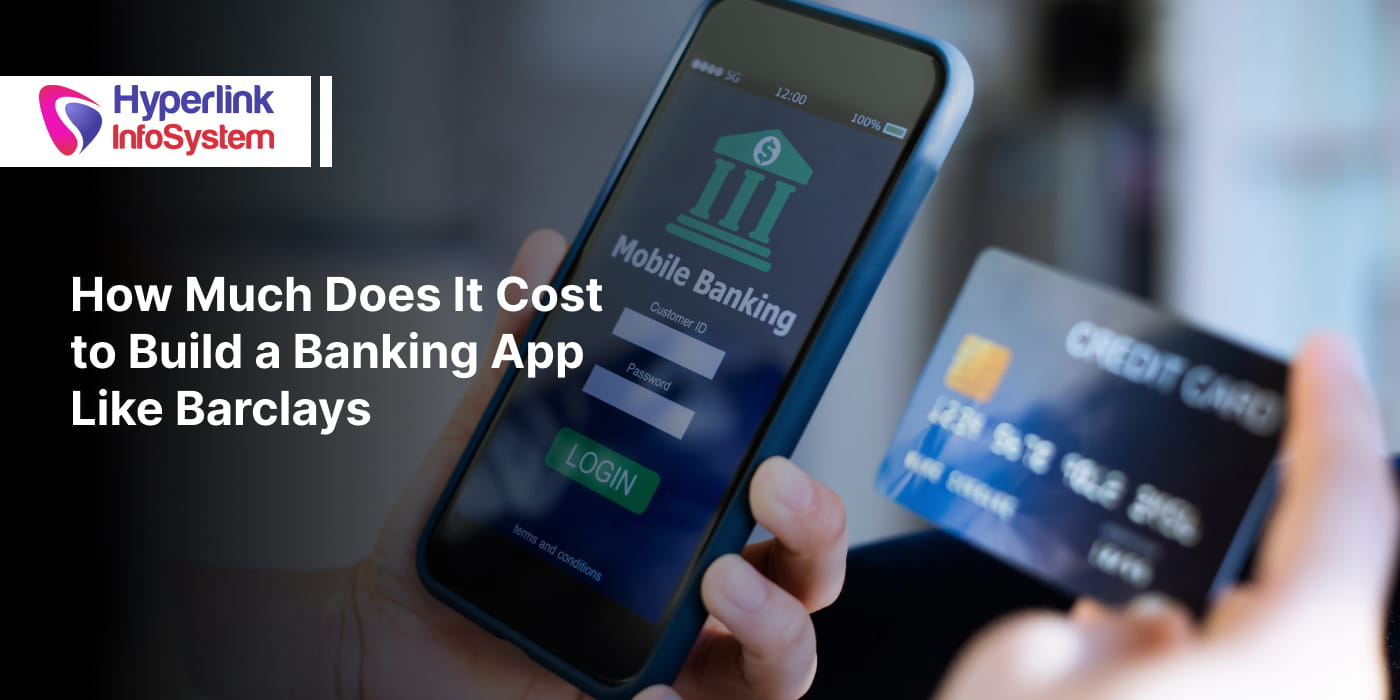

Across the globe, mobile banking is continuously undergoing a huge transformation. One of the banking apps that has set a benchmark for others to take note of is Barclays. Its app is faster, lighter, more secure, and fully compliant with global financial standards.
Today, an easy-to-navigate app that allows quick sign-ups, fast query resolution, and background-running algorithms that provide personalized investment advice has become the norm. A banking app that satisfies at least 90% of its users and continuously improves based on feedback stands out in a competitive market.
If your banking app makes users feel irritated due to frequent crashing, hard-to-find options, limited features, or complex design, then your customers won't hesitate to look elsewhere.
Mobile apps have become a primary gateway to the full spectrum of retail, investment, commercial, and corporate banking services. Central banks, too, are introducing digital frameworks that encourage innovation in financial technology.
As more people become comfortable with the digital space, they are more likely to first open the app before reaching out to the bank branch. Banks need to prepare for the next growth curve, as per Mckinsey. It says “Precision, not heft, is the great equalizer. In the age of AI, even smaller banks can capture disproportionate rewards by embedding precision into every dimension of strategy.”
The strong foundation of a seamless banking app lies in robust backend work. In this blog, we will explore the essential features of a modern banking app, key benefits, factors affecting development costs, future trends, and the challenges developers face in creating secure and user-friendly digital banking experiences.
Must-have Features of the Banking App Like Barclays
Core Features
- Account Management: Users can easily view their account balances, transaction history, and statements in a secure and organized manner. People get full control over their finances at any time.
- Fund Transfers: The app supports quick and convenient transfers between accounts. This includes setting up new payees, with options for both domestic and international payments.
- Bill Payments and Direct Debits: Digital wallet app development companies build apps that enable users to track and automate their finances. This is achieved through a feature - integrated bill payment option and easy management of direct debits.
- Multi-Factor Authentication: User accounts can be safeguarded against unauthorized access with multi-factor authentication. Some of these measures include PIN, biometric logins, and device binding.
- Notifications and Alerts: Timely reminders can keep users well-informed and proactive in managing their money. Real-time alerts for transactions, suspicious activities, and payment reminders keep them vigilant.
- Card Controls: Users can manage their cards from within the app without having to visit a bank branch. Some of these include setting spending limits, blocking or unblocking cards instantly, and generating virtual cards for secure online purchases.
Advanced Features
- Personal Finance Management Tools: Customers receive insights into spending patterns, budgeting assistance, and tailored financial advice, enabling smarter financial decisions.
- AI-Powered Fraud Detection: It's crucial to introduce AI agents in fraud prevention. AI plays a major role in detecting and preventing fraudulent activity before it impacts users. Barclays uses AI to score each transaction on a risk spectrum from low to high, enabling instant blocking or additional verification for high-risk transactions.
- Contactless and Cardless ATM Withdrawals: Users can withdraw cash without carrying their physical cards. This feature enhances both user convenience and overall security by allowing withdrawals through mobile wallets or app-based authentication.
- Open Banking API Integration: Connectivity between banking app and third-party financial services adds convenience for the user. It allows them to manage multiple accounts and services from different banks within one app interface.
- Multi-Language Support: Banking apps must cater to the diverse user demographics. It’s an important and a strategic feature that offers interfaces and support in multiple languages.
- Digital KYC and Onboarding: Digital identification and verification processes via the app adds to the convenience. Quick, paperless customer onboarding with compliance to regulatory standards through features like geotagged video KYC, document OCR, biometric authentication, and continuous risk-based due diligence.
Benefits of Banking App Like Barclays
Barclays app stands out for its trustworthiness and speed. It has set a benchmark for others to follow and think deeply about creating a mobile bank app like Barclays. Let's look at some of the benefits the app offers that makes it the most sought after choice for people.
- Quick and Secure Login: Barclays app offers fast, secure access without needing to remember passwords simply with a Touch ID or Face ID. Additionally, AI agents in fraud prevention are widely deployed within the app to prevent suspicious activities.
- Account Management: Users easily view balances, recent transactions, and manage personal, business, and credit accounts all in one place. All of these banking app development solutions centralize account control.
- Payments & Transfers: Make payments to saved payees, transfer money between accounts, and manage standing orders and direct debits simply via the app. These reflect the essentials of cost to build a banking app like Barclays.
- Rewards Program: Barclays offers Blue Rewards to earn points just by banking. Having such a unique rewards system in place is required to keep the users engaged and encourage frequent use of the app. This creative feature is expected from advanced fintech app development companies which innovate consistently.
- Document Storage: With Barclays Cloud, users can securely upload, organize, and store important documents directly in the app.
- Customer Support: Contact customer service easily through the app for quick assistance, without having to look elsewhere.
- Convenient Features: Find nearby branches and ATMs, see your mortgage account, and get spending insights for better money management.
How Much Would be the Overall Cost of Building the Banking App?
The overall cost can be estimated with the simple formula below:
Estimated Cost = Development Cost (Total Development Hours * Hourly Rate of Developers) + Testing, Security and Compliance Overhead
Below is the breakdown of the key cost factors:
- Total Development Hours: Determined by the features and complexity of the app.
- Hourly Rate of Developers: This includes region-wise hourly rate of developers.
- Testing: Includes functional and performance testing.
- Security: Includes rigorous vulnerability assessments.
- Compliance Overhead: Adherence to stringent regulations across different regions to make banking apps legally operational and trusted by users.
Below are some of the key compliance frameworks banks must follow by region:
- US: includes AML/KYC onboarding, GLBA audits, CCPA and state privacy checks, mandatory cybersecurity audits, risk assessments, ongoing fraud monitoring, and secure payment standards (PCI DSS).
- EU: includes PSD2 audits, SCA (Strong Customer Authentication) edge case handling, GDPR compliance (privacy and data breach reporting), secure open banking API testing, MiCA requirements for crypto assets, and continuous penetration/security testing.
- Asia: includes MAS technology risk management audits (Singapore), RBI security compliance with OWASP MAVS (India), strict KYC verification, data localization checks, frequent security code audits, and personal data protection law enforcement (e.g., Japan APPI reporting).
Factors Affecting the Cost of Building the App like Barclays
Several key factors influence the total cost to build a banking app like Barclays:
1) Feature Complexity
Developing essential components in modern fintech app development solutions requires time, resources, and cost. Some of these components include:
- AI-powered fraud detection
- Digital wallets
- Card controls
- Budgeting tools
2) App Type
An MVP(Minimum Viable Product) which has basic features costs less than a full-fledged mobile app. Developing a neo-bank — one that operates exclusively online without any physical branches, results in higher fintech app development cost.
3) Platform Choice
Frameworks like Flutter and React Native can significantly reduce development cost and time. However, developing native apps for both iOS and Android remains the gold standard for performance. Native app development demands more effort and budget than cross-platform frameworks.
4) Security and Compliance
Some expensive but essential security protocols that we, a market leader as a fintech app development company, stick to:
- Multi-layered security - biometrics, encryption
- KYC/AML verification
- Regulatory compliance - PCI-DSS, GDPR, PSD2
5) Third-Party Integrations:
There are a couple of integrations with third-party apps that are essential but add to the development and maintenance cost. Some of these include creating payment gateways, connecting with credit bureaus, implementing analytics tools, and integrating fraud detection APIs.
6) Development Team Location:
Hourly developer rates vary widely by region.
|
Region |
Estimated Cost per Hour (USD) |
|
Asia |
$40-$70 |
|
Eastern Europe |
$70-$120 |
|
North America |
$120-$180 |
7) Maintenance and Support
Post the launch of the app, its maintenance and support is crucial to keep the app up and running in the long run. The post- launch development costs include app updates, customer support, infrastructure scaling, and security patches.
8) Project Timeline
Another factor which can add to the overall development cost is the short timeline. Faster delivery requires more resources working simultaneously on the project.
9) Emerging Technology
Innovation in tech has proven to be a game changer, but it comes with added cost. Technology upgrades is another big driver of fintech app development cost, especially when it involves advanced capabilities.
The Future of Banking Apps Sought to Redefine the Banking Realm
You might have guessed it right! AI is the major force behind the next wave of technology advancement. As AI is transforming various industries, it's equally redefining major aspects of the banking industry as well.
Here’s everything that will dominate banking app development.
AI and Machine Learning for Personalization
AI and Machine Learning can provide personalized recommendations based on the history of transactions carried out by the user. Chatbots will become better at addressing customer queries and providing complete assistance. AI agents in Fraud prevention too will see remarkable breakthroughs with machine learning algorithms.
Blockchain for Security
Blockchain is being used extensively for security and transparency in banking applications. Blockchain provides an immutable and decentralized ledger. This means records cannot be altered without consensus from the network. Decentralized architecture reduces single points of failure and strengthens data integrity.
Green Banking
As the urgency for sustainability gets louder and fiercer, its ripple effects have started to show everywhere. Sustainability is becoming a core theme in digital banking. Future apps will integrate carbon footprint insights, paperless banking, green lending with smart contracts tied to ESG performance to list a few.
Regulatory Technology
Regulatory Technology or RegTech is gaining traction in banking and financial services. It simplifies and streamlines ever-evolving regulatory requirements by automating routine compliance tasks like anti-money laundering (AML) checks, Know Your Customer (KYC) processes, fraud detection, etc.
Challenges in Building Banking App like Barclays
|
Challenge |
Solution |
|
Compliance |
Ensure adherence to country based regulations like PSD2, GDPR, KYC and others |
|
Security |
Implement multi-factor authentication, end-to-end encryption, and AI-powered threat detection to safeguard user data and transactions. Regular vulnerability tests and security audits too are essential. |
|
User Experience |
Clean design for intuitive navigation and better accessibility. |
|
Platform Compatibility |
Easier compatibility across devices using cross-platform development frameworks, or build native apps based on goals, budget and timelines. |
|
Scalability |
Build on cloud-native infrastructure and enforce load balancing. |
|
Performance |
Ensure high speed and responsiveness under high user loads and varied network conditions |
|
Integration with Legacy System |
Without disrupting existing operations, integrate seamlessly with legacy systems. |
How can Hyperlink InfoSystem Build Your Next-generation Banking App?
Though the topic of banking app development is vast, we tried to cover the important aspects of it in this blog. As a leading banking app development company, Hyperlink InfoSystem is helping banks transform their business processes with an intuitive app.
Our expertise lies in development of advanced features backed by AI and machine learning. Apps are built to streamline financial processes along with providing exceptional user experience. Our experts excel in providing end-to-end business banking and finance app development services.
Conclusion
Barclays serves as a prime example of successful digital transformation in banking. This balance of innovation and reliability sets a benchmark for banking apps aspiring to lead in the digital era.
The mobile banking evolution shows no signs of slowing down. The future belongs to banking apps combining AI personalization, blockchain security, and green finance initiatives. Banks investing today in robust, secure, and scalable technologies will lead the next digital banking revolution.

Frequently Asked Questions
The development cost for building a banking app can start from $30,000 for MVP with limited features. The cost can go up to $4,00,000 for a full-fledged solution. The total cost includes the features, security, compliance requirements and the developers working on the app. You also need to plan for updates, security, and compliance in case of any regulatory changes.
Building a basic app with limited features can take 4 to 6 months. However, when advanced features are added for creating a mobile bank app like Barclays, it takes 1+ year.
AI and ML are increasingly getting popular for the personalized services that they can offer. Some of these include:
- Recommendations based on user behaviour.
- Smart chatbots for 24/7 support.
- Financial planning automation.
- Fraud detection with real-time anomaly tracking.
Some tried-and-tested ways to achieve user engagement and retention include:
- Gamification: Features like saving goals, rewards, and milestones generate interest among users.
- Personalized Recommendation: Sending notifications to the users that exclusively suit their needs strikes the right chord with them.
- Intuitive Interface: Users don’t like to be overloaded with options. A clean design with a search capability that retrieves closest results saves time and effort of the users.
- Smart Chatbots: Chatbots that offer real-time support can instantly resolve user queries.
Harnil Oza is the CEO & Founder of Hyperlink InfoSystem. With a passion for technology and an immaculate drive for entrepreneurship, Harnil has propelled Hyperlink InfoSystem to become a global pioneer in the world of innovative IT solutions. His exceptional leadership has inspired a multiverse of tech enthusiasts and also enabled thriving business expansion. His vision has helped the company achieve widespread respect for its remarkable track record of delivering beautifully constructed mobile apps, websites, and other products using every emerging technology. Outside his duties at Hyperlink InfoSystem, Harnil has earned a reputation for his conceptual leadership and initiatives in the tech industry. He is driven to impart expertise and insights to the forthcoming cohort of tech innovators. Harnil continues to champion growth, quality, and client satisfaction by fostering innovation and collaboration.
Latest Blogs



Is BlockChain Technology Worth The H ...
Unfolds The Revolutionary & Versatility Of Blockchain Technology ...


IoT Technology - A Future In Making ...
Everything You Need To Know About IoT Technology ...
Feel Free to Contact Us!
We would be happy to hear from you, please fill in the form below or mail us your requirements on info@hyperlinkinfosystem.com
Hyperlink InfoSystem Bring Transformation For Global Businesses
Starting from listening to your business problems to delivering accurate solutions; we make sure to follow industry-specific standards and combine them with our technical knowledge, development expertise, and extensive research.

4500+
Apps Developed

1200+
Developers

2200+
Websites Designed

140+
Games Developed

120+
AI & IoT Solutions

2700+
Happy Clients

120+
Salesforce Solutions

40+
Data Science

