




Urgent Care App Development: A Guide for Companies in 2026
Jan 2026





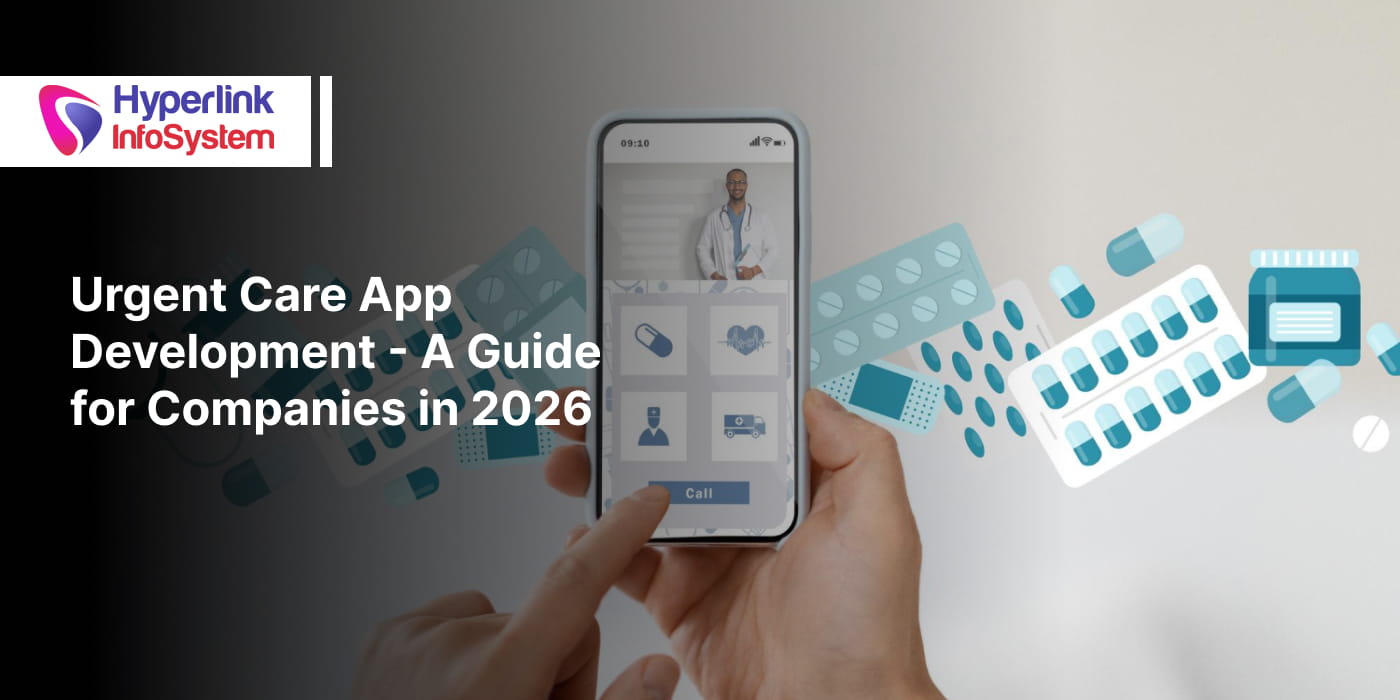

Brief Summary - The COVID-19 pandemic has compelled many sectors to reevaluate their work practices. The healthcare sector is one of them, specifically urgent care. Suppose a person experiences cardiac arrest at 2 am at his residence. Getting an ambulance to take the person to the hospital at such odd hours can be difficult. Urgent care app development can be a lifesaver under such circumstances.
The urgent care app development was valued at $4.30 billion in 2025 and is projected to reach $22.40 billion by 2030. In times of emergencies, nobody wants to wait in a queue or spend hours filling out lengthy forms. Besides meeting increased user needs, urgent care mobile app development is an excellent opportunity for companies to generate significant revenue. However, creating an urgent care app requires more than coding skills.
What does it take to develop an urgent care app? How much does it cost to build an urgent care app? Do regulations hinder the development of such an app? We know you have many questions. This blog will explore various issues related to urgent care app development. So without further ado, let’s jump into the nitty-gritty straightaway.
What is Urgent Care App Development?
Without using industry jargon or fancy words, we will try to explain urgent care app development in the simplest way possible. Urgent care apps are a type of on-demand healthcare application that assist healthcare institutions in addressing patients’ immediate healthcare needs. Urgent care app development companies are required to do more than just design and develop apps for clients.
These companies must also test these apps to ensure that they meet client requirements before deployment. With that being said, these urgent care apps must integrate effortlessly with third-party tools and systems. Not to mention, ensuring proper compliance with healthcare regulations.
8 Reasons to Develop an Urgent Care App
The global value of the mhealth market stood at $43.13 in 2025, which is expected to reach $154.12 by 2034. Urgent care apps have state-of-the-art features such as insurance, quick scheduling, and video consultations. Due to these features, clinics, hospitals, and other healthcare institutions are adopting them at a fast pace. Integrating AI with urgent care apps further bolsters their capabilities. Below are 8 reasons for companies to develop an urgent care app.
1) Higher Conversions
Most individuals dealing with a health-related issue at odd times of the day usually resort to home remedies. Alternatively, they conduct a Google search to find a cure. In either of these situations, individuals would not opt for a paid consultation with a doctor. With an urgent care app, a healthcare institution can offer timely and accurate medical advice. Additionally, it earns revenue from consultations that would have been diverted to another insulation or symptom-checker website.
2) Cuts Down on Wrong Appointments
Not every patient needs urgent care. They may book urgent care appointments out of panic or convenience. Instead, they may benefit from other treatments such as ER escalation, follow-ups, or asynchronous advice. An urgent care app equipped with smart triage features directs patients to the right place. This saves precious doctor time and patient money.
3) Loyal Clients
Usually, when patients book an urgent care appointment over the phone, they don’t return later. They prefer to consult doctors in their locality or others recommended by friends/family members. With an urgent care app, doctors and specialists can engage with patients easily through subscription features. These features include chat, discounts, family plans, and more. Furthermore, following up after an urgent care appointment creates new revenue opportunities. Also, urgent care apps make it possible to convert cold traffic into loyal clients.
4) Reduces Staff Burden
An urgent care app has many features, including smart visit templates, AI-generated SOAP notes, voice-to-chart conversions, automated ICD coding, and more. Thanks to these features, doctors and other healthcare personnel don’t have to spend time on administrative tasks. Smart templates automate many tasks such as note-taking, documentation, and creating accurate medical summaries. Eliminating manual tasks helps healthcare staff focus on other tasks.
As tasks require shorter times for completion, healthcare professionals have to endure less stress and exhaustion. Doctors can attend to more patients without making errors. This is beneficial for both doctors and patients. Overall, urgent care apps don’t just improve the patient experience. They also streamline operations while boosting productivity and saving money.
5) Data-Powered Predictive Operations
Urgent care apps collect data from customers and other sources. Then the app analyzes the data and detects patterns. The data provides insights into patients’ care-seeking patterns, common symptoms, busy hours, and hours plus geographical data. All this data helps companies plan for the future. Not only does it help gear up for problems, but it also helps to anticipate patient needs. This eliminates guesswork as companies rely on an evidence-based approach.
Such a proactive approach leads to improved decision-making. Over time, patient wait times reduce, and so do shortages and costs, resulting in proactive operations.
6) Operational Load Balancing
Often, many healthcare providers/specialists have more than one clinic. In such cases, managing multiple clinics simultaneously can be a headache. Hiring additional staff and investing in the latest equipment may not be a feasible option. The urgent care app analyzes the patient traffic at every clinic and the speed at which the staff caters to them. When patients use the app to schedule an appointment, the app analyzes patient traffic and staff availability at each clinic. Accordingly, it directs patients to the right clinic. In this way, the app reduces waiting time and ensures fast service.
This approach is better than patients overcrowding a single clinic. Also, all clinics get a steady flow of patients. No clinic is overutilized or underutilized. Patients get treated quickly and have a good experience.
7) Reduces Insurance Friction
Many times, when a patient arrives at a clinic to check their insurance coverage and other formalities, they face difficulties. Several clinics maintain physical records, and even the ones with online records are not up to the task because they work in silos. This makes the process slow and error-prone. Insurance companies may take a long time to process these claims or reject them completely. Patient care will be adversely affected, plus clinic revenue will take a hit.
With an urgent care app, companies can automate these processes before the patient visits the clinic. Pre-qualitying the patient, identifying the services, treatment, and other needs before the visit is beneficial for all. This way, the chances of claims being denied or stuck are minimized. Patients don’t have to pay out of their pockets while sinics enjoy steady revenue.
8) Regulatory Compliance
An urgent care app has built-in mechanisms that ensure healthcare workers follow the necessary steps when treating patients. These steps include asking the right questions, completing the paperwork, and maintaining records accurately. These practices create a transparent digital trail. During audits or legal issues, these practices can demonstrate that the clinic took the necessary steps and followed the established standards.
During busy hours, clinics skip steps such as paperwork, and healthcare workers perform their duties hurriedly. This may create legal issues or problems during audits. An urgent care app ensures that the healthcare establishment follows uniform procedures during all patient visits. Thanks to the urgent care app, workflows have become automated and standardized. This ensures adequate compliance with audit and other requirements.
Interested in urgent care app development for your healthcare organization? Speak with a reputed app development company to know more.
Also Read, Research On Best Healthcare APIs For Medical App Development
8 Must-Have Urgent Patient Care App Features
Before jumping into building an urgent care mobile app, healthcare organizations must consider various factors. They need to understand if the urgent care app will resonate with patients. The patient care app features should be useful while ensuring compliance and smooth operation for healthcare organizations. Below are the 8 must-have urgent patient care app features.
1) Profile Management and Registration
This feature allows patients to create a new profile and enter their specific details. Examples of these details include the following:
- Medical History
- Past Treatments
- Insurance Plans
- Emergency Contacts
When all patient-related details are available in the system, onboarding and treatment become effortless. Understanding a patient's history helps healthcare workers eliminate guesswork and administer the right treatment.
2) Real-Time Appointment Scheduling
Generally, patients call the clinic every time they need medical attention. This can be time-consuming and exhausting for everyone. Nobody wants to spend several hours on the phone. It kills their productivity. An urgent care app can eliminate many of these problems. It can enable patients to
- Schedule an appointment.
- Reschedule appointments.
- Cancel appointments
This way, patients and doctors know what to expect. They can adjust their schedules accordingly. Also, the app books an appointment only if a doctor/specialist is available. Thus, wait times are reduced, and clinics can serve patients better. If all clinics implement this feature, it will make operations smoother and more efficient.
3) Telemedicine, aka Virtual Visits
Not every patient requires immediate attention. Suppose a patient has a bout of flu or suffers from diarrhoea. Such issues are not life-threatening and may not require hospital visits. A virtual consultation will suffice. The urgent care app will do the needful and doctors will address the situation accordingly. By simply prescribing the medicines, he can handle the issue. This ensures that only patients requiring immediate attention visit the clinic. With fewer patients at the clinic, doctors can treat patients better.
4) Symptom Checker
Urgent care apps have a feature called triage or symptom checker. In the first step, patients will have to answer a list of questions related to their illness. After they answer the questions, the Symptom Checker will direct the patient to the right department (EHR, urgent care, and others). Besides saving time, the symptom checker will ensure patients get the right treatment. No more burnouts for doctors and other healthcare employees.
5) Digital Checkins
With digital check-ins, patients don’t have to call the clinic to schedule an appointment. Nor do they have to be anxious as to when the doctor will treat them. Digital check-ins reduce wait times for patients. Plus, doctors only have to treat a stipulated number of patients each day. Overall, this streamlines healthcare operations.
6) In-App Chat and Notifications
Effective communication is a must in the healthcare sector. Two-way communication will help doctors understand patients and provide the right treatment. How do in-app chats help? They do the following:
- Share timely updates.
- Exchange messages related to appointments or cases.
- Send reports quickly.
- Provide crucial advice.
Push notifications are also crucial. They alert patients about upcoming clinic appointments. Furthermore, the app also reminds patients when it is time for them to take their medicines. Whether it's crucial updates or lab reports, the urgent care app ensures patients do not miss a single update.
7) EHR Integrations
Data is king in today’s times. An urgent care app gathers data from various sources. These sources include the following:
- Patient records
- Doctor records
- Prescriptions
- Lab results.
As all the data is stored in a single repository, it ensures everyone is on the same page. Everyone can refer to this centralized information repository. Integration with EHR systems reduces manual work. Doctors have access to updated patient data, which makes treatment more accurate.
8) Billing and Insurance Verification
The billing and insurance verification feature handles patient billing and insurance verification. It conducts automated checks of a patient’s insurance. This reduces the need for paperwork and verification by healthcare professionals. Lastly, patients can use the app to pay for their tests, medicines, and custom treatments.
Thinking about getting an urgent care app for your clinic? Consult a reputed telemedicine app development expert with a proven track record.
Case Study, On Demand Healthcare App
9 Advanced Features in Urgent Care Apps
The above section discussed some must-have features in an urgent care app. Now, we will discuss advanced features that differentiate urgent care apps from commonly available apps.
1) AI-Powered Triage
Urgent care apps leverage machine learning to analyze the following:
- Key Symptoms of Diseases
- Vital Signs
- Past Patient History
- Treatments Undergone Previously
- Diet and Lifestyle
Based on the above information and more, healthcare professionals can decide how to treat patients. They can also determine the type of treatment each patient requires and how fast. Thus, AI-powered triage helps doctors detect disease quickly and administer the right treatment.
2) Smart Wait-Time Prediction
By combining historical and real-time data, apps can predict the exact waiting time for patients. With an ETA in front of them, patients can choose the right clinic to visit for treatment. In this way, the app ensures optimal customer satisfaction. The clinic’s reputation also improved over time.
3) Remote Monitoring Integration
Patients can get prescriptions and treatment in clinics. However, things can go south when patients are at home. Wearable integration helps in such cases. Integrating includes connecting urgent care apps with wearables and home devices. Examples of such devices include BP monitors and smart watches. Integration ensures patients and others get real-time alerts related to the patient’s condition. This ensures that patients get timely treatment and medication.
4) Digital Tracker
With digital trackers, patients no longer have to carry paper prescriptions. Urgent care apps instantly prescribe digital prescriptions and send them to patients. Besides prescriptions, the app also does the following:
- Send Out Timely Reminders
- Tracking Medications
- Handling Refill Requests
Thanks to these reminders, patients take their medicines on time and adhere to their appointments.
5) Multi-Location Search
The multi-location search and availability finder feature helps patients find a care center near them. It also sheds light on the number of patients at a particular clinic at any given point in time, along with doctor availability. Thus, patients will visit the location that is convenient and where they can get treatment without having to wait long. Overall, urgent care apps improve decision-making and make patient management easier.
6) Plan Personalization
Medicines alone aren’t enough. After a clinic appointment, clinicians can provide patients with bespoke exercise, diet charts, and medication plans using urgent care apps. It also sends out follow-ups to ensure that patients don’t miss future appointments or medication. Personalized alerts and assistance help patients recover quickly.
7) Family and Dependent Management
With the urgent care app, caregivers and relatives can manage a patient’s health needs. It allows them to book an appointment, access reports, and download reports. There is no need to create separate logins. As all the information lies in a single repository, user-care apps can be managed faster and more effectively.
8) Translation and Accessibility
Not all patients speak and understand English. An urgent care app translates messages into the patient’s preferred language. Also it patients navigate the app using voice-powered commands. Its design and UI are ideal for patients with disabilities. This includes visual, hearing, and other disabilities. By removing language barriers, more people can access the app to improve their lives.
9) Integrated Lab and Imaging Viewer
An integrated lab and imaging viewer allows patients to access health-related information within the app. This information includes X-rays, scans, and lab results. Also, the app explains complex medical terminology in simple and easy-to-understand language. This allows patients to better control their health. It also reduces the burden on doctors and other specialists.
Tech stack used in urgent care app development
Below is a brief explanation of the tech stack used in urgent care app development.
1) Frontend
For Mobile Apps
- Flutter - Delivers the fastest performance for cross-platform apps. Boasts a smooth UI and is ideal for real-time updates.
- React Native - Pros include a massive ecosystem with millions of users. It integrates seamlessly with healthcare APIs.
- Swift (iOS) / Kotlin (Android) - Best for apps that require maximum security and native-like performance.
Web Apps
- React.js - Most common and widely used for patient portals and admin dashboards.
- Next.js - Known for its SEO-friendliness, server-side rendering, and for building appointment booking portals.
2) Backend
- Node.js (Express / NestJS) - This is ideal for real-time chats, notifications, plus a live waiting room.
- Python (Django / FastAPI) - Preferred by healthcare institutions because of robust security packages and data validation capabilities.
- Java (Spring Boot) - Best for enterprise-grade apps. Preferred because of its HIPAA/GDPR compliance.
3) Databases
- PostgreSQL - Quite secure and relational. Best for maintaining medical records and ensuring compliance.
- MongoDB - Provides flexibility for logs, chat history, and IoT device data.
- Redis - Helps healthcare organizations with maintaining queues, along with caching and reducing appointment times.
4) HIPAA-Compliant Cloud Hosting
- AWS HealthLake, ECS, and Lambda.
- Google Cloud Healthcare API.
- Azure Healthcare Data Services.
Additionally, HIPAA-compliant cloud hosting also includes secured storage, VPC, IAM, and encryption at rest and in transit.
5) Video Consultation and Real-Time Features
- WebRTC - This is the industry standard for encrypted telehealth video.
- Twilio / Agora - Best for plug-and-play video, chat, and OTP authentication.
6) APIs and Integrations
- EHR/EMR Integration - Ensures adequate compliance with HL7 and FHIR standards.
- Payment Gateways - Integrates seamlessly with Stripe, Razorpay, and PayPal.
- Insurance Verification APIs - APIs are region-specific.
7) Authentication and Security
- OAuth 2.0 / JWT - Allows users to log in securely without sharing passwords everywhere.
- Biometric Auth - Makes it easier for users. They can log in using their face IDs or fingerprints.
- End-to-End Encryption - Allows patients and doctors to read/view video calls and conversations securely. Protects sensitive medical data and prevents unauthorized access.
- WAF, SSL/TLS, Audit Logging - Blocks hacking attempts, encrypts data during transit, and records every activity.
8) DevOps and CI/CD
- Docker and Kubernetes - They help with packaging the app and managing containers.
- GitHub Actions and GitLab CI - Powerful CI/CD tools to build your app, test the code, and deploy updates to the server.
- Terraform/Ansible - These are ideal for automating the setup, configuration, and management of servers/cloud infrastructure. They also ensure fast and uniform deployment.
9) Analytics and Monitoring
- Firebase, Analytics, and Mixpanel - Tracks user behavior and app usage. This helps clinics understand user interactions with the app.
- ELK Stack - The ELK stack gathers, stores, and visualizes system logs. Helps detect issues and ensure compliance.
- Prometheus and Grafana - Monitor app and server performance in real-time. Also displays alerts/metrics on dashboards.
Developing urgent care software solutions requires a well-thought-out strategy and experience. Consult a reputed app development company for the best results.
7 Steps to Create an Urgent Care Mobile App
When building an urgent care mobile app, healthcare institutions must adopt a calculated approach. Merely copying competitors will not help. One can imitate the features and UI, but ensuring a smooth experience may not be easy for all. Below are 7 steps to create an urgent care mobile app.
1) Market Research
First, app developers must understand the needs of all stakeholders. This includes patients and healthcare establishments. Speaking with nurses, doctors, and other specialists will deliver key insights and get the right perspective. Once they have a good understanding of these pain points, developers must ponder which features to include in the app. Examples of urgent care app features include the following:
- Appointment Booking
- Symptom Checkers
- Clinic Locators
2) App Flow and Wireframes
After deciding on the features, it is time to create an app flow. The app flow shows how users move through the app. This includes accessing it and using it to book an appointment at the clinic. Next, it is time to create basic wireframes of each screen. Using these wireframes, hospitals and clinics can visualize the app’s layout after it’s ready. At the same time, they can determine whether it is functional and easy to use, especially during emergencies.
3) Tech Stack and Architecture
The tech lays the foundation for an urgent care app. Based on the features and user expectations, app developers must choose the appropriate technologies. When building an urgent care app, there are a few technologies that come to mind. These technologies include the following:
- React Native and Flutter - For Mobile Apps
- Backend Technologies - Node.js, Python, or Firebase
Other aspects to consider include data storage techniques, server integration, and security features
4) Core Feature Development
Users want features that ensure a smooth experience. This is why it is important to focus on the key features such as user login, clinic search, video calling, appointment booking, and more. These features must be practical and work without causing issues, while ensuring scalability and security. To manage appointments and serve patients better, healthcare staff and doctors must have separate dashboards.
5) Integrations and Regulatory Compliance
Healthcare trends and requirements change frequently. Does this mean hospitals and clinics will have to include new features every few months? Not only is this impossible, but also impractical. Instead, developers can integrate the app with other tools. Examples of these tools include payment gateways, EHRs, and geolocation services. Ensuring compliance with ever-changing healthcare regulations is also non-negotiable (HIPAA and EU-CTR). These measures ensure patient data security and earn their trust.
6) Thorough Testing
The urgent care may be easy to use and have an impressive UI. However, they may not work optimally at all times. Hence, it is vital that developers test the app thoroughly to check for any flaws. Testing includes ensuring the app’s functionality, performance, usability, and security. Whether it's booking appointments or initiating video calls, users should not face any problems.
To ensure long-term success and widespread adoption, doctors and patients must use a beta version of an urgent care app. Based on the feedback, healthcare organizations must make changes to improve their app offerings.
7) App Monitoring and Improvement
After the app goes live, developers must monitor it continuously. They must also ensure that it works smoothly without creating issues. On top of that, the app must load quickly and not crash. Based on user feedback, app developers must add new features and enhancements from time to time. Improving app security and performance ensures that the app stays relevant for many years. Revenue also keeps flowing.
Do you want to know how to build an urgent care app? Consult a reputed app development company to know more.
Urgent Care App - How to Manage Healthcare Regulations?
Building a healthcare app is difficult, and we know that. However, what is more difficult is ensuring compliance with relevant healthcare regulations. Failing to do so may result in hefty fines or legal issues. Below are some tips to manage healthcare regulations when developing an urgent healthcare app.
- U HIPAA-compliant cloud and encryption for patient data.
- Implement strict access control, plus role-based permissions.
- Store detailed audit logs for accessing or changing data.
- Follow state-specific rules concerning telehealth and prescriptions.
- Conduct regular security risk assessments and scans to detect vulnerabilities.
- Maintain the latest compliance documentation, plus SOPs.
- Train staff regularly. This will help implement the right privacy and security practices.
- Embrace secure APIs. Do not store unnecessary PHI.
- Collaborate with a healthcare compliance expert. These experts can review the app, workflows, and policies, ensuring total compliance.
Want to develop an urgent care app for your clinic? Partner with a reputed healthcare mobile app development company to get optimal results.
Cost of Building an Urgent Care App in 2026: Tips to Reduce Costs
Urgent care app costs depend on several factors. These factors include app complexity, platform choice, integration, security requirements, testing, and more. Depending on the choices that healthcare organizations make, the cost may vary. Below are the urgent care app development costs based on app complexity.
- MVP App - MVP apps usually take 3 to 5 months to develop. Costs between $60,000 and $150,000.
- Medium-Complexity App - Medium-complexity apps take around 4 to 8 months for development. Costs between $150,000 and $350,000.
- Enterprise Apps - App development can take anywhere from 8 to 18 months. It can cost anywhere from $350,000 to $1M.
Recurring costs include hosting, maintenance, audits, third-party costs, and vendor fees. These costs can vary from $20,000 to $500,000 per year.
5 Tips to Limit Urgent Care App Development Costs
Below are the top five tips to control urgent care app development costs.
- Start with an MVP product.
- Use ready-made tools instead of building everything from zero.
- Focus on a single platform first. This helps control costs and reduce development time.
- Keep the design simple with a clean and standard UI.
- Integrate with a simple FHIR API first.
8 Top Healthcare Technology Trends for 2026
Below are some of the top healthcare technology trends for 2026.
- AI-Driven Diagnostics - Use multimodal AI models. This helps detect diseases faster and with greater accuracy.
- Personalized Medicine - Personalized treatment plans that take into account genomic, lifestyle, and real-time health data.
- Wearable-Based Health Monitoring - Monitors patients in real-time. This helps healthcare professionals adopt a proactive approach.
- Robotic Surgery 2.0 - Robots in 2026 will not blindly follow instructions. Robotic surgery will provide its input and make surgeries more effective.
- Gen AI for Clinicians - Use advanced AI models to accomplish manual and repetitive tasks.
- Smart Hospitals - Refers to the use of connected IoT devices and automation. It helps streamline healthcare operations and improve patient care.
- Extended Reality Training - Helps healthcare professionals practice complex procedures and emergency scenarios in a realistic, virtual environment.
- Voice-Powered Diagnostics - Healthcare professionals and AI can analyze patients' voices to detect speaking patterns. This helps in the early detection of diseases.
Do you want to develop an urgent care app for your organization? An online medical app development guide can only help to a certain degree. Consider partnering with reputed mobile app development companies.
Summing Up..
Developing urgent care software solutions has numerous benefits for patients and healthcare institutions. That said, challenges such as compliance barriers, data security, integrations, multi-platform consistency, and others can make urgent care app development a headache. Additionally, the cost of developing an urgent care app may not be feasible for all healthcare organizations. Spending $20,000 to $500,000 or more for urgent care apps may be a lot for some clinics and hospitals. Partnering with a reputable mobile app development company specializing in healthcare solutions can help greatly.
Hyperlink InfoSystem is a company that needs no introduction. With 12+ years of industry experience, they have completed over 3000+ projects with a 99% satisfaction rate. Apart from urgent care app development, Hyperlink InfoSystem has developed solutions for companies in diverse sectors. Ditching the cookie-cutter approach, the company focuses on developing custom solutions that meet specialized client needs. Speak with one of Hyperlink InfoSystem’s experts to find out what they can do for you.

Frequently Asked Questions
On-demand healthcare apps are digital platforms that patients can use to access medical services. They don’t have to wait long to access healthcare services. It is as easy as booking a taxi.
Urgent care app development is for those organizations that prioritize fast, efficient, and scalable patient care. Below are the healthcare organizations that can benefit from urgent care app development.
- Urgent Care Centres
- Hospitals and Health Systems
- Telemedicine Startups
- Multi-Speciality Clinics
- Insurance Companies
- Corporate and Workplace Health Providers
Not everyone can afford to entrust urgent care app development to companies in Europe and North America. Below are the approximate per-hour costs to develop urgent care apps in different geographical regions.
- India - $20 - $50/hour
- Asia - $15 - $40/hour
- Europe - $50 - $120/hour
- North America - $80 - $150/hour
Healthcare organizations can find mobile app developers for hire on popular platforms such as Fiverr and Upwork. Tech hiring firms and development communities are also the best places to find mobile app developers for hire.
Urgent care app developers can design apps with offline capabilities to handle such needs. For functions such as viewing medical history or queued appointment details, offline capabilities are a blessing. When internet connectivity resumes or gets better, the data will sync automatically.
Harnil Oza is the CEO & Founder of Hyperlink InfoSystem. With a passion for technology and an immaculate drive for entrepreneurship, Harnil has propelled Hyperlink InfoSystem to become a global pioneer in the world of innovative IT solutions. His exceptional leadership has inspired a multiverse of tech enthusiasts and also enabled thriving business expansion. His vision has helped the company achieve widespread respect for its remarkable track record of delivering beautifully constructed mobile apps, websites, and other products using every emerging technology. Outside his duties at Hyperlink InfoSystem, Harnil has earned a reputation for his conceptual leadership and initiatives in the tech industry. He is driven to impart expertise and insights to the forthcoming cohort of tech innovators. Harnil continues to champion growth, quality, and client satisfaction by fostering innovation and collaboration.
Latest Blogs

Is BlockChain Technology Worth The H ...
Unfolds The Revolutionary & Versatility Of Blockchain Technology ...


IoT Technology - A Future In Making ...
Everything You Need To Know About IoT Technology ...
Feel Free to Contact Us!
We would be happy to hear from you, please fill in the form below or mail us your requirements on info@hyperlinkinfosystem.com
Hyperlink InfoSystem Bring Transformation For Global Businesses
Starting from listening to your business problems to delivering accurate solutions; we make sure to follow industry-specific standards and combine them with our technical knowledge, development expertise, and extensive research.

4500+
Apps Developed

1200+
Developers

2200+
Websites Designed

140+
Games Developed

120+
AI & IoT Solutions

2700+
Happy Clients

120+
Salesforce Solutions

40+
Data Science

