




Role of IoT in Banking Sector: Use Cases, Challenges & More
Jan 2026





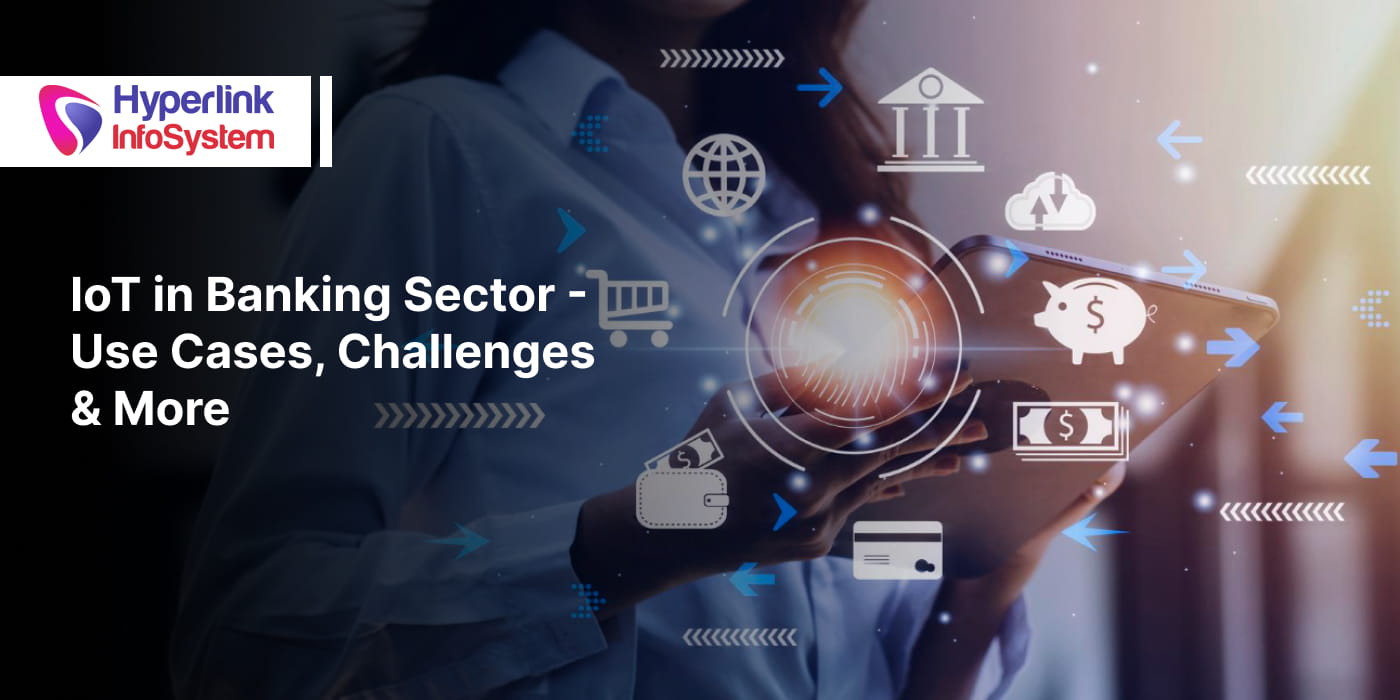

Banks and financial organizations have historically been slow to adopt new technologies. Of course, there is reluctance to adopt these technologies. However, there is another side to this story. Stringent regulations, data privacy concerns, and the integration of legacy systems are some challenges that complicate the adoption of IoT in the banking industry. The share of IoT in banking services is projected to rise from $9.476 billion in 2025 to $17.0 billion by 2035.
The statistics above show that IoT adoption is increasing in the banking industry. That said, the adoption rate is not as high as it should be. Besides resistance to change, organizations also fear IoT adoption because of high costs. These organizations must understand that IoT adoption is not an option anymore. Integrating IoT in banking makes operations more scalable, reliable, and secure.
Customer demands and preferences have also changed considerably in the past 5 years or so. They expect the same level of personalization during their banking interactions. What role does IoT play in banking operations? Does it increase revenue and customer satisfaction? Are the implementation costs high? This blog will aim to cover multiple aspects related to IoT in the banking sector. Let’s get into the specifics straightaway.
What Is IoT in Banking?
IoT in banking is the use of connected devices in operations. Some of the connected devices in banking are as follows:
- Smart ATMs
- Sensors
- Mobile Devices
- Wearables
- Smart Alarm Systems
- GPS Trackers
- Smart Safes and Vault Monitors
These connected devices gather and collect data online. The collected data undergoes further processing and is converted into other formats. These formats can be easily understood by employees. It helps in improving banking services. In addition to real-time insights for decision-making, transactions become secure. Customers can avail themselves of more personalized and faster services. Cost reductions are another icing on the cake.
5 Key Benefits of IoT in Banking Industry
Integrating IoT in banking brings immense benefits for organizations. Below are the 5 key benefits that organizations can experience after implementing IoT.
1) Enhanced Security
The combined might of IoT devices, including sensors, connected surveillance systems, and others, helps banks monitor activities in real-time. Additionally, the devices also detect suspicious activity. This prevents online criminals from committing fraud.
Continuous data monitoring over time helps banks and financial institutions identify suspicious behavior quickly. This reduces financial losses and reinforces customer trust.
2) Improved Customer Experience
Banks use a mix of IoT devices. This includes the following:
- Smartphones
- Smartwatches
- Connected Branches
Gathering data from these diverse locations helps banks better understand customer needs. Accordingly, they can recommend the right products/services to clients. Personalized offerings coupled with smooth services will boost customer satisfaction. They will continue their association with the bank.
3) Operational Efficiency and Cost Savings
IoT sensors monitor the performance of equipment and vehicles. This includes equipment used by banks, such as ATMs and cash carrying vehicles. Constant monitoring ensures that technicians get timely alerts for maintenance and parts replacement. Proactive maintenance and timely repairs reduce downtime. Employees don’t have to conduct manual checks like before. Lastly, IoT integration reduces operational costs while improving customer service levels.
4) Data-Driven Decision Making
IoT devices generate huge volumes of real-time data. This data sheds light on how customers use banking services. Banks will also get real-time insights into ATM performance, along with how different departments work together. This information allows branches to stay organized. Waiting times are reduced, and customer service improves. Last but not least, banks can make smarter business decisions. They need not rely on guesswork.
5) Better Asset and Resource Management
With interconnected IoT devices, banks can monitor valuable assets. These assets include equipment, ATMs, and vans. Due to real-time tracking, banks will always know the location of their assets. Cash vans can plan routes accordingly to avoid delays. If any equipment/vehicle has a problem, the sensors report it straightaway. This results in swift problem resolution.
Regulatory compliance also becomes simpler with IoT adoption. In short, IoT adoption in banking helps institutions stay in control of their operations and assets.
Want to experience these benefits and take your banking operations to the next level? Partner with a reputed IoT development company for the best results.
6 Use Cases of IoT in the Banking Industry
As seen in the above section, IoT can transform banking operations significantly. However, the journey is not the same for all companies. Below are some of the most notable uses of IoT in the banking industry.
Smart ATMs and Branch Monitoring
Banks and financial institutions constantly monitor ATMs and different branches using IoT devices. Whether it's non-working ATMs or a lack of cash in them, the sensors provide real-time information. Early signs of problems with equipment, such as overheating, reduce repair and maintenance costs. When these problems are brought to the notice of banks and financial institutions, they can take the right steps to address them.
Not just equipment, sensors also highlight the shortage of cash in ATMs. Overall, saving money on repairs and ensuring a steady flow of cash ensures uninterrupted operations.
Risk Management
When used in conjunction with data analysis tools, IoT devices can spot patterns of suspicious activity and fraudulent transactions. Banks will know where and when a particular device is being used. It also observes patterns of how customers conduct transactions. Humans may not notice such patterns, but iOS sensors do. They also take into consideration external conditions such as time or location.
If the system notices anything suspicious, it sends out alerts immediately. Alternatively, the system can also implement additional verification. This includes OTPs and biometric checks. Such additional checks ensure safer transactions. Also, it makes it harder for online criminals, such as hackers, to infiltrate the system.
Customer Experience Personalization
Banks gather data from various devices. These devices include smartphones, tablets, and systems within banks. This helps them get a better understanding of customer behavior and preferences. With the availability of such insights, banks can get customer attention by sending them personalized offers.
Location-based insights help banks serve customers better. For example, if customers are near a particular branch or an ATM, the bank can send them special offers. When customers are targeted with special offers, they understand that the bank has done its homework. This improves customer experience and turns them into loyal customers.
Asset and Infrastructure Management
IoT devices help banks monitor their assets. These assets include the following:
- Servers
- Vehicles that carry cash
- Security systems
Sensors and tracking devices gather information related to customer location, usage patterns, and movement in real-time. This way, banks can optimize asset use. At the same time, it allows them to detect problems early on and address them quickly. Continuous and consistent monitoring also improves regulatory compliance.
Energy and Cost Optimization
Every business has to be conscious about the energy it uses. Whether it's bank branches or financial data centres, they can consume enormous amounts of energy. IoT sensors monitor energy use in these locations, and that too in real time. Depending on the presence of people or the degree of use, sensors can turn off commonly used applications. These appliances include lights, fans, air-conditioners, and heating equipment.
This approach helps accomplish the following:
- Reduce electricity bills
- Minimize energy wastage
- Promote environmental friendliness
Connected Payments and Wearables
Forcing customers to pay with cash or cards is not a pleasant experience. With IoT in banking, customers can pay using smartwatches and other connected devices. Besides simplifying payments, these gadgets keep customer data secure. Other payment modes, such as voice commands and automatic triggers, are also a good mix of convenience and security. In short, IoT brings convenience and security to payments.
Interested in knowing what IoT implementation can do for your organization? Hire IoT developers for your next project or to revamp operations.
7 Steps to Implement IoT in Banking
Implementing IoT in banking operations is complicated. Banks and financial organizations must have a strong plan of action to implement IoT in their operations. When planning for IoT implementation, points of consideration must include scalability, security, and data privacy. Integration with legacy systems must not be overlooked. Implementation can differ from business to business. However, there are some general steps that financial organizations can follow:
1) Define Objectives and Use Cases
The first step for banks is to identify areas where IoT can add value. Examples of such areas include the following:
- ATM Monitoring
- Branch Energy Optimization
- Asset Tracking
- Fraud Detection
- Customer Behavior Analytics
When organizations understand the priorities well, they can decide where to invest. It also helps gain the confidence of stakeholders. Also, implementing IoT must not be seen as an experimental move. The move should be backed by a strategy and what the organization wants to achieve post-implementation. Every move should aim to solve a pain point or improve an existing process.
2) Choose the Right IoT Devices and Sensors
Choosing the right IoT devices and sensors is crucial. The choice of sensors and IoT devices must be based on the problems that the bank wants to solve. Examples are as below.
- Temperature Sensors - Stop data centers from heating up excessively.
- Vibration Sensors - Identify any foul play or tampering in ATMs.
- Beacons - Beacons are small, low-power wireless transmitters. This helps banks understand customer movement and behavior.
These sensors must work properly and last for a long time because they are quite expensive. Accuracy and durability are non-negotiable in banking operations. Furthermore, such devices and sensors must comply with existing regulations. Another thing to keep in mind is that the bank software must be updated regularly. This will ensure top-notch security. Additionally, up-to-date software will help the bank scale as per business needs. They can also add more devices if required.
3) Establish Secure Connectivity and Network Infrastructure
In a banking environment, data exchange between IoT devices and other systems must be stable and secure. In order to accomplish this goal, they must establish secure connectivity and invest in network infrastructure. Two crucial points must be considered before making any decision.
- Where are the devices placed?
- How much data do these devices send/consume?
Banks must choose from many networks. Options include 4G/5G and WiFi connections. How do you decide what to use and why? Banks must ask themselves the questions below.
- How much data do the devices consume?
- What is the range of these devices?
If the aim is to cover a longer range and curtail costs, networks such as NB-IoT or LoRaWAN are ideal. A key aspect to bear in mind is security. A great way to ensure optimal security is to avoid connecting IoT devices directly to banking systems. Using VPNs and firewalls can protect devices/connections from external threats. All in all, these measures ensure that devices stay operational and stable. Most importantly, banking operations remain uninterrupted.
4) Implement Data Management and Cloud Integration
IoT devices store, gather, and send data at all times. Fresh data entering the system helps banks understand customer preferences and make wise decisions. Cloud and hybrid systems can handle vast volumes of data. Not only that, but they can also process data in real-time. With the availability of real-time data, banks/financial organizations can make timely decisions. They also store previous data for future analysis.
Also, if the operations demand it, processing can be done close to the device. This ensures adequate compliance with relevant banking laws and regulations. Banks will understand how and where to store data while ensuring its security.
5) Control Access Securely
Robust security is necessary in banking operations. This is because banking systems are vulnerable to hacking attempts and data leaks. Before connecting any device to the system, it should be scanned thoroughly. Also, all the data must be in an encrypted form. This is crucial when data is in transit and also when it's stored. This ensures that only authorized employees can access the information.
Secure key management stops unauthorized systems from reading/editing information. Constant monitoring helps detect instances of unusual or suspicious activity early. By complying with PCI DSS, GDPR, and other regulations, customer data remains safe. These measures also help banks/financial institutions with audit compliance.
6) Core Banking and Analytics Integration
Whenever the IoT systems gather data from various sources, it automatically syncs with the bank’s existing systems. This real-time sync helps with problem resolution and informed decision-making. For example, when a bank’s ATM detects an issue, the system automatically sends an alert to the maintenance team. The team can come over and inspect the ATM before it stops working. Similarly, if the system detects any suspicious activity, fraud systems can jump into action and prevent losses.
Sharing customer data with CRM systems helps banks and financial institutions provide personalized services. Connected systems ensure every team/department is on the same page. This makes collaboration more efficient and boosts productivity.
7) Monitor, Optimize, and Scale
After setting IoT systems, banks will be able to monitor device performance and if they are sharing data accurately. Simple dashboards and smart software ensure early problem detection. Examples of issues include suspicious user activity or faulty equipment. Upon receiving these insights, banks can take the necessary steps, such as the following:
- Reduce operating costs
- Make the most of data
- Implement stricter security checks
- Improve customer experience
- Scale IoT safely
- Prevent fraud and tampering
Note that such steps and improvements must happen regularly. This will help banks and financial institutions implement IoT in other branches, ATMs, and digital services. This will also reduce the risks associated with implementation.
Thinking about implementing IoT in your banking operations? Team up with a reputable company specializing in IoT development services.
Cost of Implementing IoT in Banking Operations 2026
The cost of implementing IoT in banking operations depends on many factors. These factors include hardware/software, integration requirements, compliance, and maintenance, to name a few. Below are the costs of implementing IoT in banking operations based on complexity.
Pilot Project
- Estimated Cost - $35,000 - $120,000
- Duration - 3 to 4 months
- Covers basic device monitoring and simple use cases.
Medium-Level Complexity
- Estimated Cost - $120,000 - $280,000
- Duration - 4 to 6 months
- Covers multiple dashboards, use cases, and basic integration with alerts.
Advanced Integration
- Estimated Cost - $280,000 - $450,000
- Duration - 6 to 12 months
- Covers integration of IoT data with core banking flows. It also adds advanced security and analytical features.
Enterprise-Grade Deployment
- Estimated Cost - $450,000 - $700,000
- Duration - 12 to 18 months
- Includes real-time data pipelines and multi-region rollout. It also covers compliance and audit readiness.
Banks should be prepared for hidden costs. These costs include data management, storage, and processing. Ensuring the security of IoT endpoints against constantly evolving threats requires immense effort. Additionally, different devices and software often fail to work together. Making them work together requires technical knowledge, time, and effort.
7 Challenges of Implementing IoT in the Banking Sector
As stated in the sections above, implementing IoT in banking requires significant effort and investment. Below are some of the most daunting challenges that businesses face.
1) Data Security and Privacy Risks
Protect data from start to finish (across all stages). No device should be trusted blindly. Access must be given to authorized users only.
2) Device Vulnerability
Ensure the safety of devices using trusted software. Devices must be updated regularly. Only verified devices should get access.
3) High Implementation Costs
Start by implementing IoT in phases or in pilot projects. Scale slowly using cloud-based IoT platforms.
4) High Implementation Costs
Integrate IoT systems with legacy banking systems using APIs and middleware. This process ensures smooth data transfer and interoperability.
5) Regulatory Compliance
IoT systems must comply with the relevant laws. Checking for changes to these laws and abiding by them is crucial. This helps banks avoid risks and penalties.
6) Data Overload and Management
Use AI for complex data analysis. Data analysis must happen near the device (edge computing). This ensures that only crucial data is exchanged and stored.
7) Network Reliability and Latency
Use multiple networks and backup connections. In the event of technical glitches, switch to another network/connection. This will ensure continuous operations.
Implementing IoT in the banking industry has its fair share of challenges. If a bank or financial institution lacks the expertise and knowledge for IoT implementation, it is better to consult a professional technology provider for the same.
6 Future Trends for IoT in Banking
The banking industry is evolving at a fast pace as we speak. Below are the ten most happening IoT trends that will dominate banking in 2026.
- Hyper-Personalized Banking Services
- Advanced Fraud Detection and Risk Monitoring
- Smart Branches and Automated Operations
- IoT-Powered Credit Scoring and Lending
- Seamless, Contactless, and Invisible Payments
- Robust Security with Zero-Trust Models
The above trends will change the way banks and financial institutions conduct their operations. Be it customer service or fraud detection, everything will become more proactive. Also, banking services will become faster and more personalized.
Wrapping Up
In the above sections, we have explained how a bank or financial institution can approach IoT implementation. It goes beyond investing in costly devices and sensors. Having adequate knowledge about IoT devices, sensors, and how to implement them is necessary. Banks and financial institutions must know what to expect from IoT implementation. Whether it's predictive maintenance or fraud detection, the purpose should be clear. Also, they must have a proper roadmap to achieve these goals. At no time should an organization ignore cybersecurity and regulatory compliance. If necessary, organizations must hire IoT developers for the implementation.
In the future, IoT will not just help banks perform their daily tasks. It will become the brain of banking operations, helping them make wiser decisions. Risk detection and adaptation will become automated. The shift from a reactive to a proactive approach will ensure long-term sustainability. Customers will remain happier with the services and stay loyal. The secret lies in combining IoT with AI. This will ensure faster, more reliable, and accurate results. Are you thinking of implementing IoT in your banking operations? Schedule a consultation with an IoT development company.

Frequently Asked Questions
IoT development services cover a vast spectrum of services. From creating, deployment to managing IoT solutions, everything requires a proper plan. Understand that only experienced professionals or companies should handle this. There is no room for experimentation here. Below is a list of IoT development services that one can expect from a reputable company.
- IoT Strategy and Consulting
- Hardware and Device Development
- Connectivity and Communication
- IoT Software and Application Development
- Cloud and Platform Integration
- Data Analytics and AI
- Industry-Specific IoT Solutions
The best practices for IoT implementation in banking are as follows:
- Begin with security by design.
- Ensure regulatory compliance and follow data privacy laws.
- Use a scalable and cloud-native IoT platform for long-term growth.
- Implement real-time monitoring and anomaly detection.
- Enforce strong device lifecycle management.
- Keep IoT networks separate from critical banking systems.
- Plan for high availability and data recovery.
Many banks and financial institutions have successfully implemented IoT in their banking operations. Examples include Citibank, HDFC, DBS, Mastercard, Stripe, and Armis.
Banks should consider implementing IoT in their banking operations when the circumstances are as follows:
- Operational inefficiencies start rising.
- Risk of fraud is harder to control.
- Customer experience requires differentiation.
- Asset tracking becomes complex.
- Scaling digital and hybrid banking models.
- Energy and sustainability goals are a priority.
- Data-driven decisions matter.
- Bank/financial organization is all set for phased innovation.
Besides getting access to a large talent pool, hiring IoT developers from India is cost-effective. Also, Indian developers are fluent in English. They can also work as per the client’s time zones. Hiring developers from Europe or North America can cost a lot. If the goal is to get quality output at a reasonable price, hiring Indian developers is a good decision.
Harnil Oza is the CEO & Founder of Hyperlink InfoSystem. With a passion for technology and an immaculate drive for entrepreneurship, Harnil has propelled Hyperlink InfoSystem to become a global pioneer in the world of innovative IT solutions. His exceptional leadership has inspired a multiverse of tech enthusiasts and also enabled thriving business expansion. His vision has helped the company achieve widespread respect for its remarkable track record of delivering beautifully constructed mobile apps, websites, and other products using every emerging technology. Outside his duties at Hyperlink InfoSystem, Harnil has earned a reputation for his conceptual leadership and initiatives in the tech industry. He is driven to impart expertise and insights to the forthcoming cohort of tech innovators. Harnil continues to champion growth, quality, and client satisfaction by fostering innovation and collaboration.
Latest Blogs

Is BlockChain Technology Worth The H ...
Unfolds The Revolutionary & Versatility Of Blockchain Technology ...


IoT Technology - A Future In Making ...
Everything You Need To Know About IoT Technology ...
Feel Free to Contact Us!
We would be happy to hear from you, please fill in the form below or mail us your requirements on info@hyperlinkinfosystem.com
Hyperlink InfoSystem Bring Transformation For Global Businesses
Starting from listening to your business problems to delivering accurate solutions; we make sure to follow industry-specific standards and combine them with our technical knowledge, development expertise, and extensive research.

4500+
Apps Developed

1200+
Developers

2200+
Websites Designed

140+
Games Developed

120+
AI & IoT Solutions

2700+
Happy Clients

120+
Salesforce Solutions

40+
Data Science

