


Fintech Cybersecurity in 2026: Key Risks, Security Controls & Best Practices
Oct 2026



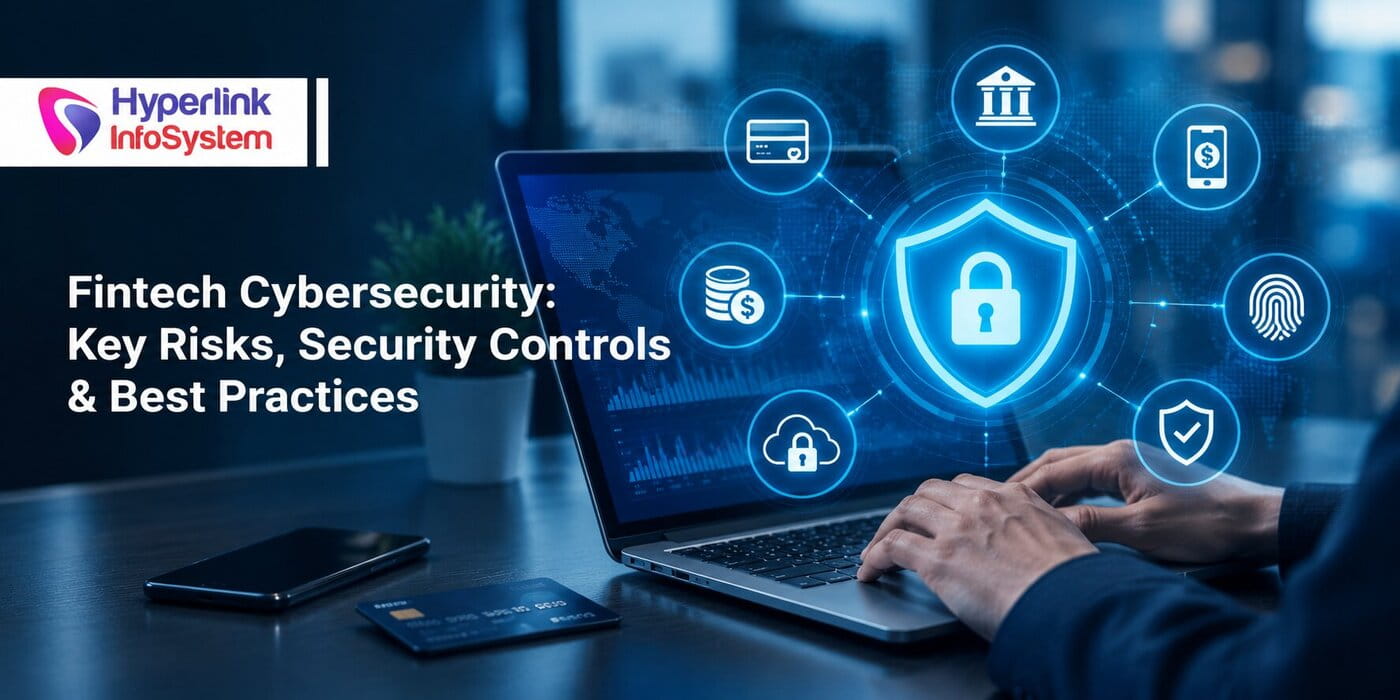

The vulnerability of one account can highlight a broader problem within a FinTech company's system. A single compromised credential will not remain a single problem. Moreover, in the event of poor API security measures and third-party applications being hacked, information could be accessed through other systems as well. The financial damage rarely stays confined to its original point of entry. That is why cybersecurity for modern businesses becomes an essential and non-negotiable factor for fintech companies.
There is a need to highlight the financial implications associated with a breach in cybersecurity. According to IBM’s 2026 Cost of a Data Breach Report, the cost associated with breaches in the financial services industry stands at $6.3 million, among the most expensive sectors studied in the report. This underscores the financial burden that comes with safeguarding the identity, finances, and speed of transactions in fintech ecosystems.
It is difficult to overcome the problem due to the increasing interconnectedness of mobile banking application development platforms, digital wallet application development solutions, payment gateway services, identity verification services, cloud environments, and third-party APIs. Each new connection represents a new source of vulnerabilities, which might cause problems by itself or in combination with some other vulnerability. The use of blockchain identity verification cybersecurity systems will not solve all problems.
On the other hand, AI used in fintech and blockchain used in fintech create new possibilities for payments, lending, identities, fraud detection, and financial operations. Blockchain and AI in FinTech can offer new opportunities, but they also raise new security challenges related to access, data, applications, and interconnections. As the financial services sector becomes more digital and interconnected, ensuring the security of a fintech platform demands more than just securing an individual application or transaction.
On the contrary, artificial intelligence used in FinTech and blockchains used in FinTech provide new ways for transactions, loans, identities, fraud detection, and financial activities. Blockchains and AI in FinTech provide new opportunities; however, at the same time, they bring up new security concerns regarding access, data, applications, and connectivity. With the increasing digitization and interconnectedness of the financial services industry, securing the FinTech platform requires more than securing only one particular application or transaction.
Why FinTech Platforms Have Become High-Value Cyber Targets
FinTech Platforms function right at the junction of money, personal identity, and always-on digital connectivity. For this reason, these platforms represent one of the most promising attacks an intruder would hope for. The factors below are the reasons why the sector draws so much attention:
1) Concentration of Financial Assets and Sensitive Records
Fintech applications manage account information, transaction data, customer identity, and payment information within a digital platform. Therefore, FinTech data security becomes a major issue since it makes the value of these platforms even more attractive to cyber criminals.
2) Continuous Dependence on Digital Financial Services
Payments, transfers, account access, and financial transactions are becoming more dependent on digital services. Any disruption in this process can impact the clients and firms who depend on it.
3) Broad and Interconnected FinTech Environments
FinTech tools link mobile apps, cloud-based solutions, financial institutions, APIs, and third-party services. This structure increases the security perimeter, making FinTech security architecture even more vital.
4) High-Pressure Operating Conditions
FinTech platforms need to ensure availability and transaction correctness in the midst of high transaction volumes. Frequent product updates and service requirements may exert additional pressure on FinTech risk management practices.
5) Complexity of Modernizing Legacy Financial Infrastructure
Several financial systems still rely on old technologies along with new applications and services. The variance in technologies, system architecture, and controls can affect the process of ensuring financial data security consistently.
6) High Financial and Strategic Value to Attackers
Financial technology platforms integrate finance, personal data, and access to essential services. The combination of financial reward and disruption opportunities makes the industry ripe for cybercriminals.
The Most Critical FinTech Cybersecurity Risks in 2026
The growing dangers from FinTech often center on vulnerabilities within the apps, interfaces, identity, and transaction processes. Such threats could endanger user accounts, expose confidential data, and obstruct financial transactions. For that reason, FinTech cybersecurity solutions are necessary in various parts of the FinTech platform.
1) Identity Theft and Account Takeover
An attacker can use compromised passwords, credential stuffing attacks, session hijacking, or bypassing the entire authentication procedure to gain control over a user’s account. By getting into the account, the attacker will be able to make changes to the account details, commit unauthorized actions, or access sensitive information. Therefore, insecure authentication procedures can easily evolve from compromising one login detail to a problem of financial application security and customers' accounts and money.
2) API and Authorization Vulnerabilities
APIs make it possible for FinTech applications to share data and take action across different services. However, if the endpoints are not well secured, then the vital functionalities can be exposed. This includes broken object-level permissions that enable users to view records or take actions that they shouldn’t be allowed to take.
3) Data Breaches and Sensitive Information Exposure
A successful breach includes KYC documents, payment data, account data, personally identifiable information, and internal databases. This information can be used for fraudulent activities by the attackers. Meanwhile, poor encryption, weak database security, and access to more data than required by the user can add to the severity of the incident. Protection of financial data in FinTech is thus considered to be essential for the security of the application and infrastructure.
4) Third-Party and Software Supply Chain Compromise
FinTech programs will often rely on outside dependencies, such as vendor partners, software libraries, API calls, cloud services, and other integrations. Even an outside dependency or a vendor whose system is compromised, or even the wrong update of software, may create vulnerabilities that don’t directly affect the main platform.
5) Payment Fraud, Transaction Manipulation, and Ransomware
Attacks on the transaction process can lead to transaction redirections, tampering with transaction data, fraudulent transactions, and other disruptions. Ransomware can be used to cause additional disruptions through denial of access to key systems and data. Effective transaction verification and control measures will play a crucial role in ensuring transaction security.
6) AI-Enabled Attacks and Synthetic Identity Fraud
AI is improving phishing, spoofing, and social engineering campaigns by making them more credible and automated. AI-powered deep voice, false identities, fake communications, and artificial customer identities may make existing methods of verification ineffective. All of these technologies can be used to commit identity fraud.
What FinTech Security Failures Look Like in the Real World
Real-world incidents highlight the impact that vulnerabilities in access control, identity protection, and transaction security can have on FinTechs.
1) Cash App
- Incident: During 2022, a former employee had access to and downloaded Cash App Investing reports post-employment.
- Impact: About 8.2 million existing and former customers' information was compromised.
- Security takeaway: Ensure that there are stringent access policies, and credentials are immediately revoked upon termination of employment.
2) Revolut
- Incident: In 2022, attackers employed social engineering tactics to get into Revolut's system without authorization.
- Impact: According to the organization, 0.16% of its customers had their personal information compromised.
- Security takeaway: Enhance security awareness of employees, access management, and intrusion detection.
3) Equifax
- Incident: Attackers took advantage of a vulnerability that was left unpatched in the Apache Struts web application employed by Equifax in 2017.
- Impact: The personal details of about 147 million people, including their Social Security numbers, were compromised.
- Security takeaways: It is critical to manage vulnerabilities, patching, and testing of applications for security.
These real-world examples demonstrate why data security in fintech needs to take into account the issues of employees’ access, application vulnerabilities, and authorization of financial transactions.
Building a Security Architecture for FinTech Platforms
A secure FinTech platform requires controls that apply across identity, applications, data, infrastructure, and operations. This is especially true when we consider FinTech app development, where security choices made in each layer affect the robustness of the entire platform.
- Identity and Access
Access to applications, systems, and financial information must be controlled by effective identity controls. Multi-factor authentication, adaptive authentication, least privilege, and privileged access management can help prevent any unauthorized access. Such controls are especially critical for mobile banking app development and digital wallet app development since customer and administrator accounts would have their own respective access levels.
- API and Application Security
All APIs and application endpoints should have an owner, as well as a security test strategy that involves the authentication, authorization, and identification of any potential security gaps. This includes the use of API inventories, secure code development practices, SAST, DAST, software composition analysis, and business logic tests to uncover vulnerabilities before they get into production.
- Data and Transaction Security
Financial information must be protected at all stages of its lifecycle through encryption, tokenization, key management, and data minimization. Transaction signing and transaction controls will also provide further security in cases of risky transactions. Good fintech data security also involves restricting access to financial information based on business needs.
- Infrastructure and Third-Party Security
Security measures must be set for cloud platforms, servers, databases, secrets, and third-party providers. Security through configuration monitoring, network segmentation, secrets management, vendor assessment, and software supply chain control can minimize risks within connected systems. Thus, the scope of fintech risk management has to encompass not only internal IT systems but also the external providers.
- Detection, Response, and Resilience
Prevention will not be enough to prevent every security problem from occurring. SIEM tools, anomaly detection systems, threat intelligence programs, incident response plans, backups, and recovery tests allow security professionals to detect and neutralize security threats and keep important processes running. The proper implementation of the cybersecurity for modern businesses framework will help to tie all this together.
Securing FinTech Applications Across the Development Lifecycle
It is important for security to be integrated into the process of building FinTech apps. Every phase of the development process carries with it its own security obligations.
|
Development Stage |
Key Security Practices |
What It Covers |
|
Planning |
Threat Modeling, Security Requirements, Data Classification. |
Detect possible dangers, set expectations for security, and classify sensitive financial and customer information before beginning development. |
|
Development |
Secure Coding, Secrets Management, Dependency/SCA Scanning, API Authorization. |
Mitigate code weaknesses, safeguard credentials, find possible weak spots, and enforce proper access controls to APIs. |
|
Testing |
SAST, DAST, API Testing, Penetration Testing, Mobile Security Testing. |
Identifies vulnerabilities in source code, live applications, APIs, and mobile interfaces before they go into production. |
|
Deployment |
CI/CD Security Gates, Infrastructure Configuration, Access Controls. |
Keeps vulnerable builds and unsafe configurations out of production by controlling access to the environment where applications get deployed. |
|
Post-Launch |
Runtime Monitoring, Vulnerability Management, Incident Response, Continuous Testing. |
Monitors production actions, deals with new vulnerabilities, handles incidents, and continually checks on application security. |
FinTech Compliance and Cybersecurity Requirements
FinTech platforms are required to adhere to rigorous international regulations to maintain their operating licenses and safeguard financial ecosystems.
- PCI DSS
Required for all payment card environments. Version 4.0.1 of PCI DSS is the latest active version, which requires mandatory data tokenization, network segmentation, and multi-factor authentication audit logs.
- DORA
Applies to financial institutions functioning within the European Union (EU). Since January 17, 2025, DORA has been effective and stresses operational resilience and software supply chains through ICT.
- GDPR and Privacy Laws
Regulates global data protection and privacy laws. These policies require mandatory compliance with strict user consent monitoring, total data minimization principles, and the right-to-erase access over stored financial profiles.
- Regional Financial Regulations
Requirements differ greatly depending on individual jurisdictions and the type of product. The platform needs to be compliant with regional regulations, such as NYDFS Part 500 or RBI guidelines.
FinTech Cybersecurity Best Practices for Enterprise Teams
Fintech cybersecurity will be effective according to how consistent it is in its governance throughout development, access, APIs, and data. Fintech enterprises need to set up processes that continue as the apps and infrastructure change.
1) Shift-Left and Continuous Application Security
Ensure that security is a collaborative effort between developers and security professionals as an end phase. DevSecOps approach, security gates, continuous vulnerability analysis, and training developers on security issues could enhance secure software development for fintech applications.
2) Zero Trust Identity and Access Management
Continuously verify users, devices, apps, and services, and grant access based on identity, context, and business needs. Access review and privilege validation will go a long way toward securing financial applications and preventing obsolete permissions from becoming security vulnerabilities.
3) Bulletproof API Defensive Architecture
Consider APIs to be continuously governed access points instead of independent development modules. Ensure that there is an up-to-date inventory of APIs, detect abnormal activity, implement usage rules, and check exposed API endpoints on a regular basis. Effective fintech API security decreases unaccounted-for APIs and exposure of APIs.
4) Resilient Cryptographic Data Lifecycle
Treat sensitive data in accordance with its security requirements through its entire lifecycle. Establish retention policies, safeguard encryption keys, rotate credentials appropriately, and eliminate unneeded data that is no longer needed. These steps help enhance the security of fintech data as well as minimize the amount of sensitive data exposure.
Why Cybersecurity Failures Can Cost a FinTech Business
When a fintech platform suffers a major exploit, the problem immediately becomes one of the greatest crises for the organization. The reason for this lies in the high-velocity transaction processing capacity and huge volumes of personal data held by such platforms, meaning that the financial implications become significant very quickly.
Direct Costs of a FinTech Security Failure
|
Cost Category |
Primary Impact |
Estimated Cost Range (USD) |
|
Breach Cost and Cleanup |
Forensic investigations in emergencies, retainers for expert legal representation, public relations management, and obligatory customer notifications. |
$4.5 Million – $9.0 Million average cost per breach in the financial sector |
|
Fraud Loss |
Taken up chargebacks from the credit cards, non-recovery wire transfers, and direct repayment of digital wallets. |
Millions of dollars (proportionately increases as platform speed increases) |
|
Regulatory Fines |
Fines resulting from negligence in security that may be levied by regulators like DORA, GDPR, and NYDFS Part 500. |
Up to 4% of global annual turnover or multiple million-dollar fines |
|
Downtime |
Suspension of all transaction fees, software release processes, and merchant volume as engineers work on isolating production environments. |
$100,000 to $300,000 per hour of critical system downtime |
|
Customer Churn |
Migration of customers to safer competition, reduced Customer Lifetime Value, and increased Customer Acquisition Costs (CAC). |
20% to 30% mean reduction of active user base in 12 months |
Create Secure FinTech Platforms with Hyperlink InfoSystem
The issue of security should determine the development, design, and maintenance of the fintech product because the trust of customers is directly related to the safety of the platform’s operations in regard to finance. The best fintech products have security as one of the principles of the product.
As one of the top FinTech software development companies, Hyperlink InfoSystem assists businesses in building safe financial systems based on their product needs and operational environment. Our team of developers can support Fintech app development through architecture design, application development, API integration, cloud computing, security testing, and enhancement processes.
We specialize in developing mobile banking apps, digital wallet apps, payment gateway solutions, financial management software, and even blockchain-enabled software solutions. Security measures can be integrated into the development process to ensure that you have a platform that is ready to deal with future challenges.
For companies looking to develop a secure financial product, you can partner with our team of experts, and we will help you turn your financial product idea into a reliable platform.

Frequently Asked Questions
Security testing should be conducted constantly during the development process, as well as on a regular basis for pen-testing and vulnerability assessment, in case any modifications to the system have been made.
Consider the security controls, authentication techniques, data handling procedures, access rights, compliance obligations, incident response processes, and dependencies of the service. The API documentation, results of security testing, and contract obligations should also be considered prior to the integration process.
Security can be incorporated in the development process through automation, secure code writing, reusable controls, and security checks within the CI/CD process. It will help organizations find security flaws in the development process itself rather than waiting for release time.
The appropriate standards will be determined based on the nature of the product, type of data processed, payment options, and markets where the solution will operate. If it involves processing payment cards, the project will need to meet PCI DSS standards.
The team should enhance identity controls, watch out for suspicious activities, ensure high-risk transactions are verified, safeguard AI systems and data, and perform testing using new attack techniques. The security team should also refine their detection and response strategies as AI threats evolve.
Harnil Oza is the CEO & Founder of Hyperlink InfoSystem. With a passion for technology and an immaculate drive for entrepreneurship, Harnil has propelled Hyperlink InfoSystem to become a global pioneer in the world of innovative IT solutions. His exceptional leadership has inspired a multiverse of tech enthusiasts and also enabled thriving business expansion. His vision has helped the company achieve widespread respect for its remarkable track record of delivering beautifully constructed mobile apps, websites, and other products using every emerging technology. Outside his duties at Hyperlink InfoSystem, Harnil has earned a reputation for his conceptual leadership and initiatives in the tech industry. He is driven to impart expertise and insights to the forthcoming cohort of tech innovators. Harnil continues to champion growth, quality, and client satisfaction by fostering innovation and collaboration.
Latest Blogs



Is BlockChain Technology Worth The H ...
Unfolds The Revolutionary & Versatility Of Blockchain Technology ...


IoT Technology - A Future In Making ...
Everything You Need To Know About IoT Technology ...
Feel Free to Contact Us!
We would be happy to hear from you, please fill in the form below or mail us your requirements on info@hyperlinkinfosystem.com
Hyperlink InfoSystem Bring Transformation For Global Businesses
Starting from listening to your business problems to delivering accurate solutions; we make sure to follow industry-specific standards and combine them with our technical knowledge, development expertise, and extensive research.

4500+
Apps Developed

1200+
Developers

2200+
Websites Designed

140+
Games Developed

120+
AI & IoT Solutions

2700+
Happy Clients

120+
Salesforce Solutions

40+
Data Science

