




How Deepfake Fraud Targets Businesses and What You Can Do to Stop It in 2026
Jun 2026





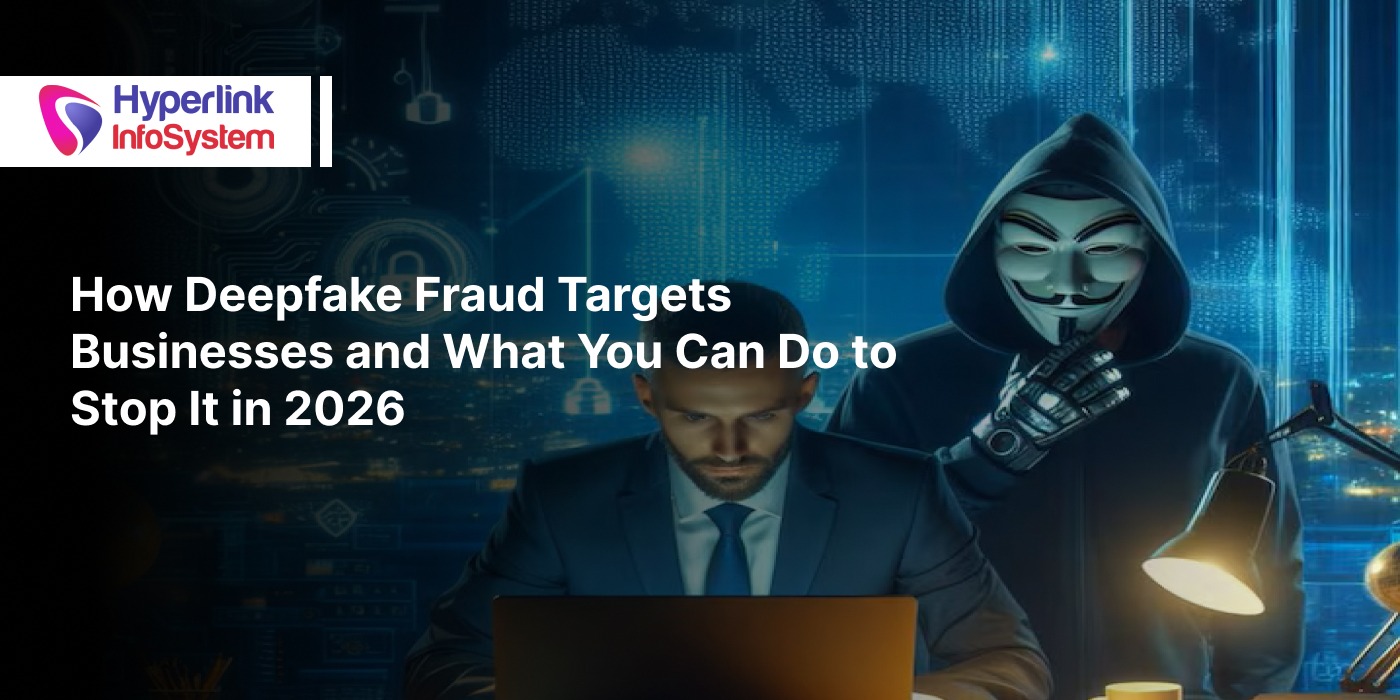

A finance director at a multinational company joins a video call with what appears to be his CFO and several colleagues. The instructions are clear - authorize a transfer, move quickly, keep it quiet for now. He does. The call was entirely synthetic. Every face, every voice. The company lost $25 million.
That incident isn't hypothetical. A version of it happened. And the organizations thinking "that couldn't happen to us" are, statistically, the ones most at risk.
Generative AI didn't just improve deepfake quality - it made it cheap and accessible. A convincing voice clone no longer needs a studio or a machine learning team. It needs a few minutes of publicly available audio and tools anyone can download today. That accessibility changed the threat entirely. Not just in scale, but in who's capable of running these attacks.
For businesses, the damage is already showing up. Close to half of organizations globally have reported encountering AI-powered voice or video fraud attempts. Cybercriminals are using synthetic media to impersonate executives, push through fraudulent transfers, manipulate employees mid-call, and get past identity systems that organizations spent years building. Finance professionals - experienced ones - have been deceived. Not because they weren't careful. Because the impersonation gave them no reason to be suspicious.
And the conditions making this worse aren't temporary. Remote work made video-based approvals normal. Digital collaboration moved consequential decisions onto channels that can be intercepted or spoofed. Every podcast appearance, every webinar recording, every conference talk a senior leader participates in is, from an attacker's perspective, training data.
This guide is about what's actually happening with these attacks, which sectors are absorbing the most damage, what warning signs exist, and - most practically - what organizations can build right now before an incident forces their hand.
What Is Deepfake Fraud?
Deepfake fraud is the malicious use of AI to generate synthetic content - voice, video, text, or some combination - that impersonates real individuals convincingly enough to deceive employees, customers, or automated security systems.
The term itself combines two concepts:
- Deep Learning - the AI architecture powering the generation
- Fake Content - the synthetic output it produces
What these systems can replicate now goes well past rough approximation:
- Voice patterns and speech cadence
- Facial movements and micro-expressions
- Writing tone and communication style
- Body language and visual appearance
- Real-time conversational behavior
The fraud dimension of this is specifically about trust. Traditional scams are detectable because something feels wrong - the sender doesn't match, the phrasing is off, the context doesn't quite fit. Deepfake attacks don't work that way. They exploit existing familiarity, appearing to come from someone the target already knows and has no reason to doubt.
That's not a variation on old fraud. That's a different attack surface entirely - and it needs a different kind of response.
Why Deepfake Fraud Is Becoming a Major Business Threat
Generative AI Tools Are More Accessible
The barrier collapsed, and it collapsed fast. Platforms capable of generating realistic synthetic voices and video are widely available - many free, most inexpensive. The technical skill floor dropped at the same time output quality climbed. That combination creates a threat that scales differently than earlier fraud methods, because it doesn't require the resources or expertise that used to act as a natural filter on who could run these attacks.
Digital Communication Is Increasing
Businesses conduct genuinely critical activities through:
- Video conferencing
- Virtual collaboration platforms
- Remote approval workflows
- Digital customer interactions
Every one of these is a potential impersonation vector. The more business moved online, the more surface area opened up.
Executives Have Larger Digital Footprints
Most senior leaders have substantial publicly available media - conference talks, podcast episodes, webinar recordings, LinkedIn videos, media interviews. From a business perspective, that visibility has value. From an attacker's perspective, it's a training dataset. The more of it exists, the easier it becomes to build a convincing replica of how someone sounds and looks.
Financial Incentives Are Growing
A successful deepfake attack on a finance team can move hundreds of thousands - sometimes millions - of dollars before anyone realizes something went wrong. Organized criminal groups are running these as structured operations, not one-off experiments. The return on investment is driving real innovation on the attacker side, and that investment shows in the sophistication of what's being deployed.
How Deepfake Fraud Targets Businesses
The attack sequence is more structured than most people assume. This isn't opportunistic - it's methodical, and it follows a recognizable pattern.
1: Reconnaissance
Attackers research the target organization - names, executive profiles, reporting structures, communication patterns, and any publicly available audio or video of people they intend to impersonate.
2: AI Model Creation
Collected material trains an AI system capable of replicating specific individuals' voices, facial movements, or writing style with enough fidelity to be convincing in context.
3: Synthetic Content Generation
The output gets produced - fake voice recordings, AI-generated video messages, real-time voice cloning, or deepfake video conference participants, depending on what the attack requires.
4: Attack Execution
Synthetic content reaches the target - typically someone with financial authorization, system access, or the ability to share sensitive information.
5: Financial or Operational Exploitation
The attacker gets what they came for - fraudulent payment, credential theft, data access, system compromise. In many cases, the organization doesn't identify what happened until well after the damage is done.
Common Types of Deepfake Fraud Attacks
Executive Impersonation Fraud
This is the most documented attack type, and the financial losses tied to it are significant. An employee receives a message, call, or video request appearing to come from a CEO, CFO, or other senior leader - asking them to approve a payment, share confidential data, update banking information, or grant system access.
Why it works isn't complicated. Employees are conditioned to respond quickly to executive requests. Questioning them carries perceived professional risk. Fraudsters understand this dynamic and build it into how they construct the attack - urgency, authority, and familiarity, all engineered to prevent the pause that would expose the fraud.
Deepfake Voice Scams
Voice cloning technology now produces convincing replicas from a few minutes of publicly available audio. Any executive who has appeared on a recorded call, podcast, or webinar has, functionally, already provided enough raw material. Attack scenarios include fake executive phone calls, vendor impersonation, customer service fraud, and internal authorization requests. Organizations that still treat voice recognition as identity verification have a real exposure problem.
Video Meeting Manipulation
Live deepfake participation in video calls is technically more demanding than pre-recorded content - but the capability exists and is developing rapidly. Objectives range from influencing business decisions and extracting confidential information to building trust for follow-on attacks. Among security professionals, this is the vector generating the most concern about near-term risk.
Business Email Compromise Enhanced by AI
Traditional phishing had tells. Awkward phrasing, off-brand tone, impersonal language. AI-assisted versions replicate writing style, vocabulary patterns, and communication habits with enough accuracy to make them genuinely difficult to distinguish from legitimate correspondence - particularly for employees who don't interact directly with senior leaders often enough to notice subtle deviations.
Identity Verification Bypass
Facial recognition, voice authentication, and biometric systems were designed before synthetic identity generation reached current capability levels. Advanced deepfakes are being actively tested against these systems - and in documented cases, have succeeded. The exposure this creates touches customer onboarding, access control, and any process that depends on biometric verification.
Industries Most at Risk
Deepfake fraud can hit any organization. That said, some sectors face structurally higher exposure based on transaction volumes, data value, and attack economics.
Financial Services
High-value transaction volumes make the fraud economics attractive. Wire transfer fraud, account takeover, and executive impersonation targeting finance teams are well-documented attack patterns.
Healthcare
Patient records, insurance claim processes, and provider authentication systems create multiple entry points. Sensitive data combined with complex authorization workflows creates genuine vulnerability across several attack surfaces simultaneously.
Manufacturing
Supply chain relationships involving multiple vendors and approval workflows are vulnerable to procurement fraud, supplier impersonation, and contract manipulation - often in ways that aren't detected quickly.
Technology Companies
Valuable intellectual property and sensitive business information make tech firms attractive targets, particularly for attacks focused on data theft rather than immediate financial fraud.
Government and Public Sector
Beyond financial exposure, government institutions face misinformation risks, identity fraud, and in some contexts, national security implications that extend well past the immediate incident.
Business Consequences of Deepfake Fraud
The damage from a successful attack compounds in ways that don't always appear clearly in the initial incident report.
Financial Damage
Unauthorized transfers and fraudulent payments are the obvious headline number. Recovery is rarely clean, and in cases involving international wire transfers, it often isn't possible.
Data Breaches
Employees who trust fraudulent communications may disclose customer information, financial records, trade secrets, or internal documentation that creates downstream liability well beyond the original event.
Reputational Harm
Public incidents erode customer and stakeholder confidence in ways that take years to recover from. The story of an organization deceived by an AI impersonation is not one that fades quickly.
Regulatory and Compliance Risks
Data exposure or financial misconduct in regulated industries triggers investigations, penalties, and reporting obligations that generate ongoing costs and management distraction long after the initial event.
Operational Disruption
Incident response diverts resources from core operations. Even when financial damage is contained, the distraction cost is real and measurable.
Warning Signs of Deepfake Fraud
Training employees to recognize these patterns is among the most cost-effective defenses an organization can build.
Urgent Requests
Fraudsters manufacture urgency deliberately. "This needs to happen in the next hour" is a pressure tactic, not a legitimate operational need. Urgency is a reason to slow down and verify, not comply faster.
Unusual Communication Channels
A request arriving through an unexpected platform, personal email, or unfamiliar number warrants independent verification - regardless of how familiar the voice or face appears.
Deviations from Normal Processes
Legitimate executives don't typically ask employees to bypass established approval workflows. Any request to skip standard procedure should trigger verification, not action.
Inconsistent Details
Minor inconsistencies in language, timing, context, or behavior often appear on closer examination. The urgency is specifically designed to prevent that closer look.
Unexpected Requests for Sensitive Information
Any unsolicited request for credentials, financial information, or confidential data should be verified through a separate, known-good channel before anything happens.
What Businesses Can Do to Stop Deepfake Fraud
Implement Multi-Layer Verification Processes
No critical action - financial transfer, data sharing, system access - should depend on a single communication channel. Require multiple approvals, independent verification, and secondary confirmation through channels that weren't part of the original request. The friction this adds is genuinely small compared to the exposure it removes.
Strengthen Identity Verification
Voice and visual recognition aren't reliable identity proof anymore. Modern authentication methods that hold up against synthetic media include:
- Multi-factor authentication (MFA)
- Device verification
- Behavioral biometrics
- Risk-based authentication
The policy-level assumption that you can trust what you see and hear in a digital communication needs to change - not just at the technical layer, but in how employees are trained to operate.
Train Employees Continuously
One training session doesn't hold against a threat that keeps evolving. Regular, updated awareness programs need to cover deepfake risks, social engineering tactics, verification procedures, and incident reporting with enough specificity that employees know what to do when something feels wrong - not just what to look for.
The single most important shift: recognizing a familiar voice or face is no longer sufficient confirmation of who you're talking to.
Use AI-Powered Fraud Detection Tools
AI detecting AI isn't a complete solution, but it's a meaningful layer. Advanced security platforms can analyze voice anomalies, facial inconsistencies, behavioral patterns, and transaction risks in ways that complement human judgment rather than substitute for it. Organizations without in-house expertise to build or customize this detection layer often choose to hire AI developers with fraud detection experience specifically - the tuning required to catch sophisticated synthetic media is different from general security engineering. As attack sophistication increases, these tools move from useful to necessary.
Case study : AI-Powered Fraud Detection
Protect Executive Digital Footprints
Limiting executive visibility entirely isn't realistic - public presence serves legitimate business purposes. But organizations should actively monitor for unauthorized content usage, impersonation attempts, and fake profiles, and should be deliberate about where and how executive audio and video gets published.
Strengthen Financial Controls
When other layers fail, financial controls are what limit the damage:
- Segregation of duties
- Approval workflows requiring multiple sign-offs
- Transaction monitoring
- Complete audit trails
No individual should have unilateral authority to authorize significant payments - regardless of how legitimate the requesting communication appears.
Establish an Incident Response Plan
Organizations that prepare for deepfake-related incidents before they happen respond faster and recover better than those improvising under pressure. A working plan covers detection procedures, escalation paths, communication strategies, and legal response protocols. Test it before it's needed.
How AI Is Helping Fight Deepfake Fraud
Worth naming directly: the same technology powering the attacks is increasingly central to the defenses.
Modern AI-driven cybersecurity platforms are getting meaningfully better at:
- Detecting Synthetic Voices - Analyzing subtle audio artifacts and patterns that fall below human perception thresholds but are consistent enough to flag algorithmically.
- Identifying Manipulated Videos - Detecting inconsistencies in facial movement, lighting behavior, and image composition that synthetic generation reliably introduces.
- Monitoring User Behavior - Recognizing deviations from established behavioral baselines that might signal account compromise or active impersonation.
- Assessing Transaction Risk - Evaluating financial activity in real time against contextual patterns, flagging anomalies before authorization rather than after.
The detection side of this space is developing quickly. Organizations investing in it now will be better positioned as attack sophistication continues to increase - and it will. For organizations with specific compliance or industry requirements that off-the-shelf detection platforms don't fully address, custom AI development services can build detection models tuned to the organization's actual transaction patterns and risk profile rather than relying on generic fraud signatures.
Future Trends in Deepfake Fraud
Real-Time Deepfake Attacks
Live video and voice impersonation capabilities are improving steadily. What's technically demanding today will be accessible within the next product cycle. Defense architectures being built now should account for threats slightly ahead of current capability, not just what's being deployed today.
AI-Powered Social Engineering
Deepfakes combined with generative AI for research, personalization, and persuasion produce attacks that are harder to detect and harder to resist than any single technique operating alone.
Increased Regulatory Oversight
Governments are moving toward frameworks addressing AI-generated content and digital identity protection. Organizations in regulated industries should anticipate compliance requirements in this space, not just best practices guidance.
Deepfake Detection Innovation
Dedicated authentication technologies for digital communications are an active development area. Some of the most promising work involves cryptographic verification of media provenance - essentially establishing a chain of custody for digital content. The same generative AI development solutions advancing synthetic media quality are increasingly being adapted specifically for detection and watermarking purposes, creating a genuine arms-race dynamic between generation and verification capabilities.
Enterprise AI Security Investments
Security budgets are increasingly reflecting deepfake-specific line items. Organizations still treating this as a niche or emerging risk are likely underestimating what's already present in their threat landscape.
Best Practices for Building a Deepfake-Resilient Organization
The organizations handling this best aren't primarily adding tools. They're changing assumptions at the policy level - which is harder and more important.
- Establish verification-first cultures where secondary confirmation is normal, not exceptional or suspicious
- Regularly update cybersecurity policies to reflect the current threat landscape rather than last year's incident patterns
- Conduct simulated deepfake attack exercises to find gaps before attackers do
- Invest in fraud detection technologies that keep pace with generation capabilities
- Review executive communication processes specifically asking what attack surface they create
- Treat the threat model as continuously evolving rather than a problem to be solved once
Conclusion
What makes deepfake fraud genuinely dangerous - more dangerous than most fraud types that preceded it - is what it actually attacks. Not systems. Not passwords. Not processes. Trust. Specifically, the trust that employees place in familiar voices, familiar faces, and familiar authority.
Traditional security assumptions break down when the impersonation is convincing enough. An employee who verifies emails, questions unusual requests, and follows established procedures can still be deceived by a real-time voice clone of their CFO. The technology moved faster than organizational awareness, and that gap is where the losses are happening.
Closing that gap requires something systematic. Verification procedures that don't rely on audiovisual recognition. Employee training honest about current attack capabilities. AI-powered detection that catches what human perception misses. Financial controls designed with the assumption that any communication channel could be compromised. Governance frameworks that treat this as a strategic business risk rather than a technical problem someone in IT is handling.
As revenue operations become increasingly complex, having the right technology and implementation strategy in place can make a significant difference in business performance. Whether you're planning to modernize your quote-to-cash process, automate billing workflows, or improve revenue forecasting, the right Salesforce Revenue Cloud solution can help create a more connected and scalable revenue ecosystem. Learn more about our Salesforce expertise and discover how we can help your organization achieve its revenue growth objectives.

Frequently Asked Questions
Deepfake fraud is the use of AI-generated voice, video, or text to impersonate trusted individuals, such as executives or employees, to deceive organizations into transferring money, sharing sensitive data, or granting unauthorized access.
Attackers collect publicly available audio, video, and communication samples, then use AI tools to replicate a person's voice, appearance, or writing style for fraudulent purposes.
Financial services, healthcare, manufacturing, technology companies, and government organizations are among the most targeted sectors due to their valuable data, financial transactions, and critical operations.
Businesses can reduce risk by implementing multi-factor authentication (MFA), multi-step approval processes, employee awareness training, AI-powered fraud detection tools, and strong financial controls.
Yes. Modern AI security solutions can identify synthetic voices, manipulated videos, unusual user behavior, and suspicious transactions, helping organizations detect and stop deepfake attacks before significant damage occurs.
Harnil Oza is the CEO & Founder of Hyperlink InfoSystem. With a passion for technology and an immaculate drive for entrepreneurship, Harnil has propelled Hyperlink InfoSystem to become a global pioneer in the world of innovative IT solutions. His exceptional leadership has inspired a multiverse of tech enthusiasts and also enabled thriving business expansion. His vision has helped the company achieve widespread respect for its remarkable track record of delivering beautifully constructed mobile apps, websites, and other products using every emerging technology. Outside his duties at Hyperlink InfoSystem, Harnil has earned a reputation for his conceptual leadership and initiatives in the tech industry. He is driven to impart expertise and insights to the forthcoming cohort of tech innovators. Harnil continues to champion growth, quality, and client satisfaction by fostering innovation and collaboration.
Latest Blogs





Is BlockChain Technology Worth The H ...
Unfolds The Revolutionary & Versatility Of Blockchain Technology ...


IoT Technology - A Future In Making ...
Everything You Need To Know About IoT Technology ...
Feel Free to Contact Us!
We would be happy to hear from you, please fill in the form below or mail us your requirements on info@hyperlinkinfosystem.com
Hyperlink InfoSystem Bring Transformation For Global Businesses
Starting from listening to your business problems to delivering accurate solutions; we make sure to follow industry-specific standards and combine them with our technical knowledge, development expertise, and extensive research.

4500+
Apps Developed

1200+
Developers

2200+
Websites Designed

140+
Games Developed

120+
AI & IoT Solutions

2700+
Happy Clients

120+
Salesforce Solutions

40+
Data Science

