
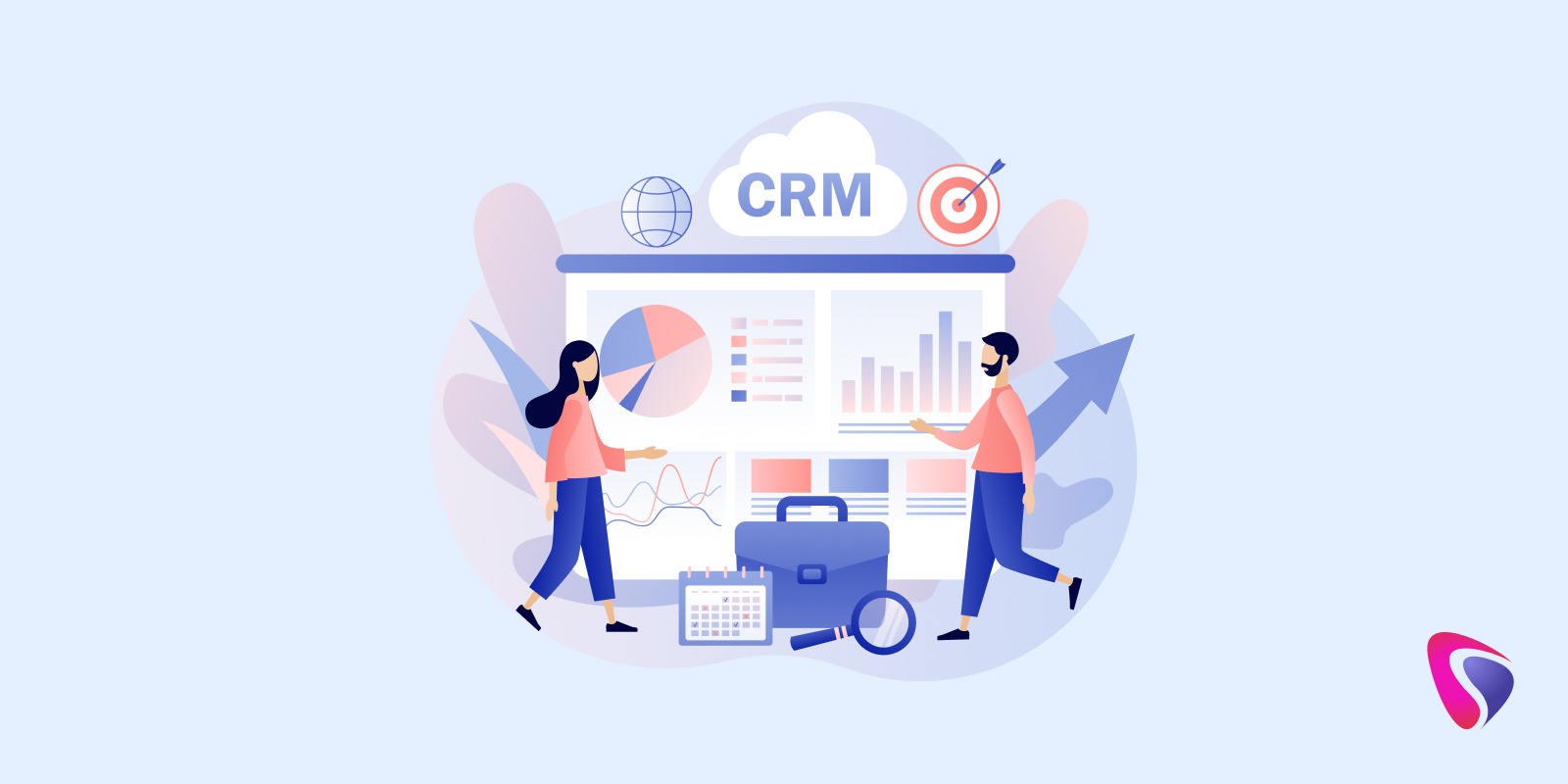




CRM systems have been the backbone of sales, service, marketing, and business operations for a long time now. And for most of that time, "CRM automation" meant one thing: build a workflow, define the rules, and let the system handle the repetitive stuff.
That's still happening - but something bigger is also happening alongside it.
In 2026, the conversation has moved on from whether to automate to something more interesting: what if the system could actually think through a situation instead of just reacting to it? What if instead of following a script, it could read context, make a judgment call, and take action - the way a capable employee would?
That's the territory Salesforce Agentforce is moving into. And it's why so many organizations are trying to figure out exactly how it differs from the automation they've been running for years.
The short answer is this: traditional CRM automation executes instructions. Agentforce interprets objectives and figures out how to achieve them. The gap between those two things is larger than it sounds, and this guide is about what that gap actually means in practice.
What Is Traditional CRM Automation?
Traditional CRM automation is built on a simple but powerful idea: define what should happen when specific conditions are met, and let the system handle it automatically.
The mechanics are familiar to anyone who's worked in a CRM environment - if a lead fills out a form, assign it to the right sales rep and send a welcome email. If a support ticket sits unresolved past a certain threshold, escalate it. If an opportunity moves to a certain stage, trigger an approval workflow.
Common examples include lead assignment, follow-up email sequences, support ticket creation, record updates, approval processes, report generation, and task scheduling.
What makes this model work is its predictability. The workflow executes exactly as designed, every time, without variation. For structured, repetitive processes that need to run consistently - that's genuinely valuable. It's also easy to audit, relatively simple to implement, and cost-effective for what it does.
The limitation is baked into the design itself: it can't handle anything outside what it was programmed for. An unexpected situation, an ambiguous input, a customer question that doesn't fit the decision tree - traditional automation simply doesn't have the flexibility to navigate any of that.
What Is Salesforce Agentforce?
Agentforce is a different category of thing entirely.
Rather than executing predefined workflows, Agentforce lets organizations deploy AI-powered agents that can understand context, reason through a situation, pull from relevant information sources, and take action - without needing a human to initiate every step.
These agents draw on generative AI, large language models, enterprise data, Salesforce platform capabilities, business workflows, and knowledge repositories. The result is a system that can dynamically figure out the best course of action based on what's actually happening, not just what was anticipated when someone built the workflow.
The simplest way to think about it: traditional automation behaves like a very reliable machine. Agentforce behaves more like a thoughtful digital employee - one that can handle situations it hasn't seen before, because it's reasoning through them rather than pattern-matching against a ruleset.
The Evolution from Automation to Autonomous Agents
It helps to see this as a progression rather than a sudden jump.
Early CRM was entirely manual - data entry, record updates, lead assignment, report generation all done by hand. Labor-intensive and error-prone, but it was the only option.
Rule-based automation was the first major leap. Workflows took over the repetitive work, efficiency improved considerably, and teams could focus on things that actually needed human attention. The catch was that flexibility stayed limited - the system could only do what it was explicitly told to do.
AI-assisted CRM added a layer of intelligence in the form of lead scoring, predictive analytics, customer insights, and forecasting. These systems gave users better information to act on, but humans still had to do the acting.
Agentforce represents the next stage - agentic CRM, where the system doesn't just inform decisions but makes and executes them. Agents understand goals, evaluate situations, determine next steps, and carry them out, adapting as new information comes in.
Each stage built on the one before it. Agentforce doesn't make rule-based automation obsolete - it extends what's possible well beyond what rule-based automation can reach.
Salesforce Agentforce vs Traditional CRM Automation: Key Differences
| Factor | Traditional CRM Automation | Salesforce Agentforce |
|---|---|---|
| Decision Making | Rule-based | AI-driven |
| Adaptability | Limited | Dynamic |
| Context Awareness | Minimal | High |
| Learning Capability | None | AI-powered reasoning |
| Customer Interaction | Predefined responses | Conversational engagement |
| Workflow Execution | Static | Goal-oriented |
| Data Analysis | Limited | Advanced contextual analysis |
| Personalization | Rule-driven | Real-time adaptive |
| Human Intervention | Frequent | Reduced |
| Scalability | Process dependent | Highly scalable |
How Traditional CRM Automation Works
A traditional CRM workflow follows a straightforward three-part structure.
It starts with a trigger - something happens in the system. A form gets submitted, an opportunity gets created, a case gets escalated. That event sets the workflow in motion.
The system then evaluates whether predefined conditions are met. If the lead came from a specific region, if the ticket priority exceeds a certain level, if the deal value crosses a threshold - whatever criteria were built in.
If conditions are met, the workflow executes its action: sends an email, updates a field, assigns a record, generates a notification.
The system follows those instructions exactly. It won't deviate, won't adapt, and won't handle anything it wasn't explicitly programmed for. That consistency is genuinely useful for structured processes - and it becomes a real limitation the moment something unexpected happens.
How Salesforce Agentforce Works
Agentforce approaches the same problem from a completely different angle.
Instead of receiving a trigger and executing a predefined response, an Agentforce agent receives a goal. Something like: help convert this sales lead, or resolve this customer issue.
From there, the agent gathers context - pulling from CRM records, customer interaction history, purchase data, support cases, knowledge articles, whatever's relevant. It uses that context to reason through the situation and determine what action makes the most sense given the current state of things.
That action might be reaching out to a customer, updating records, scheduling a meeting, escalating an issue, or generating a recommendation. And critically, the agent adjusts its approach as new information comes in - it's not locked into a path it chose at the start.
This is what makes Agentforce substantially more flexible than traditional automation. It's not following a script. It's working toward an objective using whatever information is available to it.
Benefits of Traditional CRM Automation
It's worth being clear that traditional automation isn't going anywhere, because it does several things very well.
Process consistency is probably its strongest suit - workflows execute predictably every time, which matters a lot for compliance-driven processes or anything where variation is a problem. It also reduces manual work meaningfully for repetitive tasks, keeps governance straightforward because the rules are transparent and auditable, and stays cost-effective for simple, stable processes.
For organizations with well-defined, repeatable workflows that don't require judgment calls, rule-based automation continues to deliver real value. That's not going to change.
Benefits of Salesforce Agentforce
Where Agentforce earns its place is in situations that go beyond what a ruleset can handle.
The most obvious benefit is intelligent decision-making - agents can evaluate genuinely complex situations and determine appropriate responses rather than hitting a wall the moment something unexpected comes up. That translates directly into better customer experiences, because interactions can be personalized and context-aware rather than driven by predefined response templates.
For teams dealing with high operational workloads, the productivity shift is significant. Agents can handle larger portions of work autonomously, operate continuously without waiting on human availability, and scale across departments without requiring proportional headcount growth.
That last point - scalable digital labor - is probably the one getting the most attention from enterprise leaders right now. The ability to expand capacity without expanding headcount is a different kind of value proposition than what traditional automation ever offered.
Salesforce Agentforce Use Cases
AI Sales Development Representatives
Agents can qualify incoming leads, answer product questions, schedule meetings, and recommend appropriate next steps - keeping pipeline development moving even when human SDRs are unavailable or occupied elsewhere.
Customer Service Agents
Agentforce can resolve common support issues, surface relevant knowledge base content, provide personalized responses based on customer history, and escalate to a human when the situation genuinely calls for it.
Healthcare CRM & Operations
In regulated industries like healthcare, Agentforce can support patient engagement workflows, appointment follow-ups, and care coordination - while traditional automation handles the compliance-driven documentation processes that require strict consistency.
Case study : Healthcare CRM & Operations with Salesforce Automation
Marketing Optimization
Agents analyze campaign performance, audience engagement, and customer behavior, then recommend or execute adjustments automatically rather than waiting for a human to review a dashboard.
Commerce Assistance
AI agents guide customers through product selection and purchasing journeys, adapting recommendations based on what the customer has expressed interest in.
Internal Employee Support
Agentforce can function as an internal assistant, helping employees find information, navigate processes, or get operational guidance without creating tickets or waiting for responses.
Business Impact: Agentforce vs Traditional Automation
When organizations look at this from a business outcomes perspective, the differences become pretty concrete.
On productivity, traditional automation reduces manual tasks. Agentforce reduces both manual tasks and the decision-making overhead that sits on top of them - which is often where more time actually goes.
On customer experience, rule-based workflows support consistency. Agentforce supports personalization and adaptability, which is increasingly what customers expect.
On scalability, traditional automation scales specific workflows. Agentforce scales decision-making capability - which is a harder thing to replicate otherwise.
And on revenue, AI agents can proactively identify opportunities, engage customers at the right moment, and move sales processes forward in ways that go well beyond operational efficiency into actual growth contribution.
Challenges Organizations Should Consider
Both approaches carry their own challenges, and being honest about them matters.
Traditional automation becomes harder to maintain as processes evolve. It struggles with exceptions, requires manual updates whenever business logic changes, and its static nature means edge cases either get ignored or require human intervention every time.
Agentforce introduces a different set of considerations - governance requirements for how AI agents operate, monitoring to ensure they're behaving as intended, data quality dependencies (the agents are only as good as the information they're working with), change management for teams adapting to working alongside AI, and regulatory considerations depending on the industry and geography.
These aren't reasons to avoid Agentforce - they're reasons to plan its implementation carefully.Organizations that want to move quickly often choose to hire Salesforce developers with hands-on Agentforce experience to navigate the governance, data, and integration setup from the start.
Should Agentforce Replace Traditional CRM Automation?
This framing tends to be more confusing than helpful, because the honest answer is that it doesn't need to.
Traditional automation is the right tool for structured workflows, compliance-driven processes, and anything where predictability and auditability are the primary requirements. It's not going to be replaced by AI agents for those use cases - and it shouldn't be.
Agentforce is most valuable where complexity, personalization, and adaptive decision-making matter - customer-facing interactions, knowledge-intensive activities, high-volume decision workflows, situations where context changes frequently.
Most organizations are heading toward a hybrid approach, and that makes sense. The goal is using each tool where it actually fits, not picking one and discarding the other.
The Future of CRM: From Automation to Digital Labor
The CRM landscape is shifting from systems that store customer information and automate workflows toward platforms that include autonomous digital workers capable of executing real business functions.
The trends shaping this in 2026 - AI agent adoption across departments, increasingly individualized customer interactions, autonomous handling of service and engagement activities, AI-powered revenue operations, and human-AI collaboration becoming standard - all point toward the same direction: AI agents becoming a normal part of how business gets done, not an experimental addition to it.
Agentforce is positioned at the center of this shift within the Salesforce ecosystem, and it reflects a broader investment trend in autonomous AI systems development - building infrastructure where AI agents can own entire workflows end to end, not just assist with individual tasks.
How to Determine the Right Approach for Your Business
If your processes are highly predictable, compliance requirements are strict, workflow logic is straightforward, and cost optimization is the primary objective - traditional CRM automation is probably still the right fit for those workflows.
If customer interactions require real personalization, teams are managing high operational workloads, decision-making processes are genuinely complex, or business growth is creating demand for scalable digital labor - that's where Agentforce starts making a compelling case for itself.
For most organizations, the practical answer is: both, applied where each actually makes sense - and many find it worthwhile to partner with a Salesforce development company to design that hybrid model correctly from the beginning.
Conclusion
The difference between Salesforce Agentforce and traditional CRM automation isn't just a product comparison - it reflects something broader happening across enterprise technology right now.
Traditional CRM automation executes predefined rules. It's reliable, transparent, and still highly effective for structured processes that need consistency and control. That value doesn't disappear just because something more sophisticated has arrived.
Salesforce Agentforce introduces a layer of autonomous reasoning - agents that can evaluate situations, adapt to context, make decisions, and take action in ways that look a lot more like how a capable employee works than how a workflow executes.
For most organizations, the real opportunity isn't choosing between these two approaches - it's figuring out how to combine them intelligently. The predictability of rule-based automation where processes are well-defined, and the intelligence of AI agents where complexity and personalization matter.
That combination - human expertise, traditional automation, and AI-powered agents working together - is increasingly what CRM looks like for organizations taking this seriously in 2026. For teams navigating this shift, Salesforce consulting can play a meaningful role in aligning the right tools to the right processes before deployment.
FAQ’s
1. What is the core difference between Agentforce and traditional CRM automation?
Traditional CRM automation follows predefined rules and triggers, while Agentforce uses AI reasoning to interpret goals, evaluate context, and decide the best course of action dynamically.
2. Can Agentforce replace traditional CRM automation entirely?
No. Traditional automation remains ideal for structured, compliance-driven workflows. Agentforce excels where complexity and personalization are needed. Most organizations benefit from running both together.
3. What are the main use cases for Salesforce Agentforce?
AI sales development, customer service resolution, marketing optimization, commerce assistance, and internal employee support - anywhere adaptive decision-making adds more value than fixed rules.
4. What challenges should businesses expect when adopting Agentforce?
Key considerations include AI governance, agent monitoring, data quality, team change management, and industry-specific regulatory compliance.
5. How do I know which approach is right for my business?
Choose traditional automation for predictable, rule-based processes. Choose Agentforce where customer interactions demand personalization, workloads are high, or decisions require real-time context and judgment.