




The Role of Artificial Intelligence in Modern Healthcare
Dec 2025





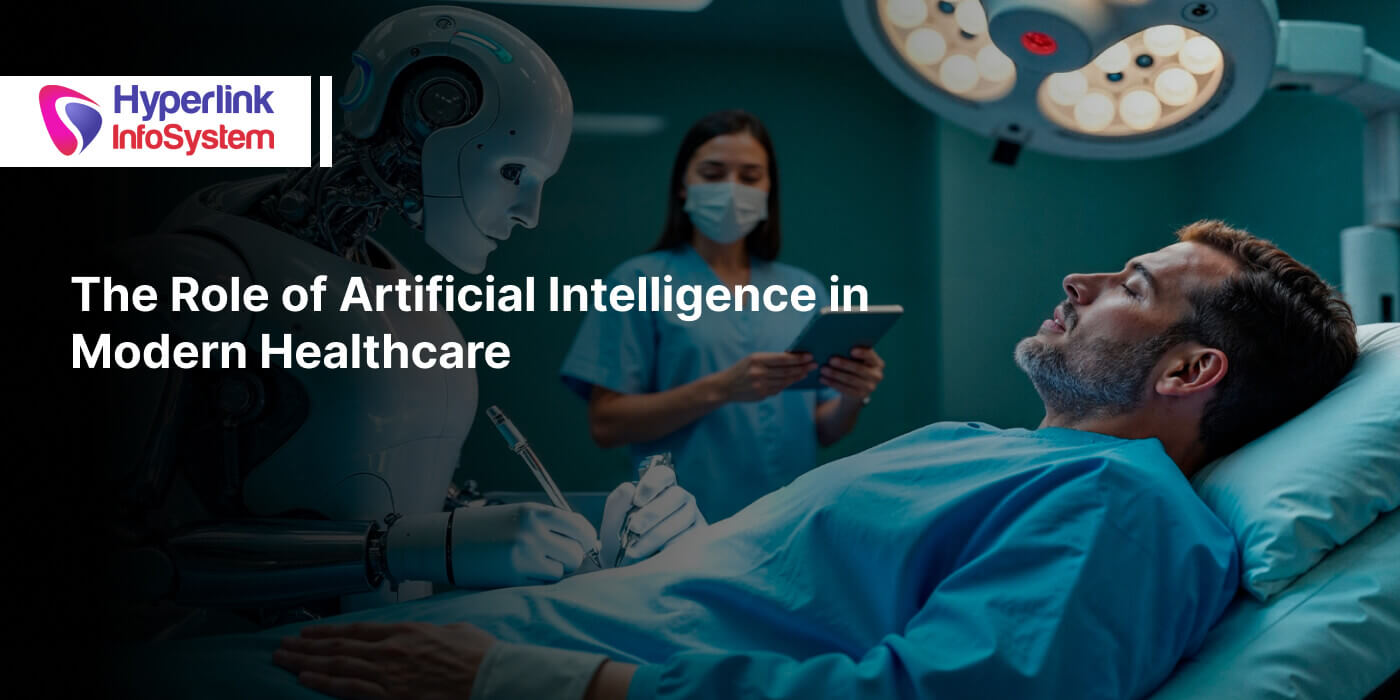

Gone are the days when treatment began after the doctor/specialist diagnosed the problem. By the time the doctor learns of the disease, it may be too late. Recognizing the seriousness of the matter, the healthcare sector in the UK has steadily adopted AI. From early disease detection and tailored treatments to automating processes, AI is completely transforming the future of healthcare in the UK.
The share of AI in the UK healthcare market is projected to reach a whopping US $12,493.8 million by 2030. Even the UK government is planning to revolutionize the NHS (National Health Service) using AI. Not just government-affiliated healthcare bodies, even private players in the healthcare sector are starting to adopt AI.
Presently, many hospitals in the UK are using AI to detect cancer. This has helped them save many lives. Hiring additional doctors, nurses, and other healthcare employees can be uneconomical for most healthcare institutions. Integrating AI in healthcare automates repetitive tasks and allows employees to focus on more pressing matters. Besides empowering doctors with valuable data, AI also puts patients in the driver’s seat. It helps them track and control their health more than ever before.
This blog will focus on how AI is transforming the future of healthcare. Apart from this, we will also delve into other aspects such as the benefits of AI, challenges, costs, and more. Without further ado, let’s get started.
New Developments in UK Healthcare for 2026
- Time for clinical trial approvals in the UK has been reduced from 91 days to 41 days.
- 10-year health plan has been introduced in the UK to modernize the existing healthcare setup.
- MHRA announces three major projects that have integrated AI.
- 2 million pounds allocated for drug testing.
- AI is being trained on the NHS’s massive data set of 57 million people.
11 Ways AI is Transforming the Future of UK Healthcare
2026 is almost here, and AI is making major inroads in the UK healthcare sector. It is no longer an experimental technology. In 2025, the use of AI rose to 94% in the UK’s healthcare organizations. Some organizations still use legacy equipment and software that newer nationwide initiatives can help with AI adoption. Below are ten ways in which AI is transforming the future of UK healthcare.
1) Diagnostics
Disease detection is one of the major areas where AI has proved its mettle. AI-powered medical imaging systems can analyze scans and detect anomalies with accuracy and speed that humans can only imagine. Recently, the NHS invested 21 million pounds to create an AI tool.
The tool is an asset for radiologists in over 64 hospitals. It helps them detect lung tumours with more accuracy and speed.
DeepMind and Moorfields Eye Hospital have collaborated to create an innovative AI solution. This is a notable achievement in UK healthcare. It detects over 50 eye conditions quickly. Sometimes, expert doctors may struggle to diagnose a certain condition. But AI can perform the same task within minutes.
That said, there are AI tools that can analyze microscopic slides and detect skin cancer. Healthcare workers are burdened with so many tasks and patients. Not only does AI help healthcare workers in the UK detect diseases faster, but it also helps them manage their workload better.
2) Predictive Analytics
The NHS is harnessing the capabilities of AI to predict illnesses before they endanger people’s lives. Machine learning models analyze patient reports and other data to determine which individuals are at the greatest risk of getting sick and requiring additional care. It can also determine people who have been in accidents and emergencies before.
Lately, an AI-based system has been implemented in over 125 hospitals in Britain. This system identifies individuals who are most likely to require repeated emergency visits. Identifying such people early on enables healthcare workers to offer preventive care. This can help patients avoid life-threatening situations.
Besides identifying illnesses and their intensity, AI is a great asset for healthcare organizations. Artificial intelligence helps them anticipate the demand for the number of beds, medicines, and surgeries. Predictive analytics for heart disease and dementia can ensure a better quality of life. Patients don’t have to wait until the disease takes effect. Early identification can help doctors administer care in time.
3) AI-Powered Triage and Symptom Checking
The NHS’s homegrown chatbot, called NHS 111, and other AI-powered apps can help patients determine the seriousness of their illnesses. These chatbots allow patients to enter their symptoms or describe them using voice. Based on the inputs, the chatbots decide whether they require a doctor’s appointment. If the problem can be resolved by basic medicines or home care, the chatbot suggests the same. This eases the workload for healthcare workers. However, experts continuously monitor the safety and accuracy of these chatbots and virtual assistants.
4) Self-Care and Remote Monitoring
Healthcare can be expensive for patients battling long-term conditions. Examples of these conditions include cancer, epilepsy, or diabetes. But AI can help such individuals manage such conditions without being confined to a hospital. AI uses sensors to detect blood sugar levels in diabetes patients. Asthma patients can also benefit from AI-driven tools.
AI tools detect the breathing patterns in asthma patients and alert them before they experience an attack. Additionally, AI tools generate plenty of sensor data that provides tailored tips and medication advice. These tips can help patients manage chronic conditions and live a better life.
5) Mental Health Management
At present, UK healthcare institutions are experimenting with AI chatbot specialists. AI therapy chatbots have been deployed to help patients manage mental health conditions like depression. The chatbot tracks the patient’s mood and alerts healthcare workers if they do something dangerous or indulge in self-harm.
Over time, AI may even combine data from wearables from sources like wearables, health records, and reports to design personalized wellness plans for patients. Usually, these plans include a combination of breathing, relaxation, diet, and physical exercises.
6) Operational Efficiency
Healthcare professionals in the UK waste countless hours performing repetitive and time-consuming tasks. These tasks include filling out patient forms, data entry, and updating existing patient records. AI can handle all these tasks and allow healthcare workers to focus on productive tasks.
On top of that, AI tracks the availability of the resources. When employees know what resources they have, they can plan accordingly and perform their tasks better. In a pandemic-like situation, this planning helps greatly. With enough staff, beds, and equipment, healthcare professionals can perform their duties better. Patients also experience greater satisfaction. Thanks to AI, healthcare institutions can allocate resources better without incurring additional expenses. As healthcare workers can attend to more patients, this reduces waiting queues and ensures greater satisfaction.
7) Personalized Patient Care
Based on the data received, the AI tools conduct a comprehensive analysis while considering a patient’s medical history, genetics, and lifestyle. This analysis helps determine potential health risks. It can identify early signs of diseases or heart attacks. Often, when symptoms appear, it may be too late. With AI, hospitals can identify diseases before symptoms appear. This helps them implement treatment plans quickly. This improves the patient's recovery and chances of survival.
Doctors and specialists can use AI-generated data to develop customized treatment plans. Such plans consider various factors, including the patient’s condition, body type, and more. This proactive approach ensures that patients get treatment before their condition gets worse. Patients get timely treatment, plus the hospital can reduce costs. Traditional treatments adopt a generic approach, but AI ensures that doctors treat patients based on their specific conditions.
8) Clinical Decision-Making
AI is a powerful tool to improve the performance of healthcare professionals. It helps them automate repetitive tasks and conduct deep research. Examples of repetitive tasks include analyzing patient data and medical records. While AI can’t replace doctors, it can certainly detect key details that humans may omit. Above all, AI learns from past treatments and how doctors handled complex situations before. This helps AI determine treatments that will yield better results.
Evidence-based treatment will always be more effective than guesswork. This is especially true for complex cases where there is a small margin for error. Effective treatment saves more lives. Newly recruited healthcare professionals can use AI to improve their skills and make informed decisions.
9) Research, Trials, and Innovation
Healthcare institutions in the UK analyze vast volumes of data. This analysis helps scientists find out which medicines work for a particular disease. AI considers various aspects when choosing the right individuals for clinical trials. These aspects include the following:
- Disease Patterns
- Genetics
- Medical History
- Lifestyle and Socioeconomic Factors
- Patient Preferences
- Geographical Location
This increases the chances of success and the accuracy of the results. Real-time analysis of trial data helps scientists identify trends or new disease strains quickly. This saves testing time and money while saving countless lives. New medicines reach the public faster due to speedier trials.
10) Better Access and Equity of Care
Previously, healthcare was not accessible to everyone. This has changed with AI-powered digital tools. Different segments of society can now avail themselves of healthcare facilities. This includes people in remote or hard-to-reach areas. Several AI-powered tools have entered the market. Examples of these tools include the following:
- Mobile Health Apps
- Remote Consultations
- AI Chatbots
With these tools, patients can access medical care without leaving their homes. Also, AI sets a benchmark for doctors across the UK. Uniform medical treatments ensure everyone receives the same quality of healthcare.
11) Regulatory Frameworks for AI
AI is definitely an asset in UK healthcare, but healthcare institutions must use it safely. Britain’s government is in the process of framing rules and bodies to ensure the safe use of AI in healthcare. These bodies will be entrusted with the responsibility to ensure that AI tools work accurately. At the same time, AI tools must be unbiased while detecting diseases in people. Protecting patient data is also crucial.
Setting clear guidelines will help the NHS use AI effectively. Doctors can use AI for complex tasks and get accurate results. When patients and healthcare professionals know how to use AI effectively, it builds trust and creates a healthy ecosystem.
Do you want to implement AI in your healthcare organization? Consult a reputed AI development company for guidance and implementation.
8 Benefits of AI in Healthcare
Below are some of the most notable benefits of implementing AI in UK healthcare.
- Improved diagnosis and early detection. This is ideal for life-threatening diseases.
- Optimized resource allocation, automates repetitive tasks, and reduces staff workload.
- Helps develop personalized treatment plans and precision medicine for effective treatments.
- Accelerated drug discovery and research. AI speeds up research and lowers costs.
- Enhanced patient management and monitoring through wearables, AI chatbots, and virtual assistants.
- Data-driven public health insights.
- Reduced hospital costs and treatment plans.
- Sustainable and long-term healthcare operations.
8 Challenges of Implementing AI in UK Healthcare
Implementing AI in healthcare has many benefits. However, it also comes with its fair share of challenges. Below are the 8 major challenges of implementing AI in healthcare.
- Stringent Data Regulations : Solution - Store data on company servers, allowing AI to learn from vast data sets. All data remains anonymous while adhering to NHS privacy regulations.
- Siloed Health Data : Siloed patient data records mean the AI model will not produce accurate results. Ensure interoperability while following NHS FHIR standards.
- Limited Technical Skills : Even now, many NHS healthcare staff don’t know how to use AI. The solution lies in launching countrywide AI training and upskilling workshops.
- Regulatory Hurdles : Speed up the AI approval process. Developers must test their AI healthcare solutions in a regulatory sandbox. Working closely with the MHRA.
- Implementation Costs : Significant upfront investment costs make companies hesitant to adopt AI. The solution lies in public companies teaming up with private enterprises. Phased AI deployment also reduces costs.
- Biased Algorithms : AI solutions trained on skewed data can result in poor outcomes. Train the AI model on diverse data that consists of patient data from all over the country.
- Legacy System Integration : Old NHS systems are incompatible with new AI solutions. Use APIs and middleware that ensure smooth data sharing.
- Ethical and Accountability Issues : When an AI tool makes an error, it is challenging to determine the reason. The fault could lie with an individual or the AI tool itself. The solution lies in creating clear rules. This helps identify who is at fault in case of errors.
Want to implement AI in your healthcare organization but worried about the challenges? Consult a professional AI development service provider in your country.
Cost of Implementing AI in Healthcare
Below is the cost of implementing AI in healthcare based on the operation size and complexity.
- Basic Project - $10,000 - $100,000
- Medium-Complexity Project - $100,000 - $500,000
- High-Complexity Project - $500,000 - 1 Million
- Enterprise-Level Project - Over $1 Million
The figures above are just to give our readers a brief idea. For the best results, it is best to partner with a healthcare app development company.
Final Thoughts
AI is transforming the future of healthcare in the UK, and this is just the beginning. As time passes, we will see more and more use cases of AI. With AI, healthcare organizations can reduce costs, boost efficiency, and improve patient outcomes. Sure, AI has its share of benefits, but there are many challenges associated with it. We have discussed them in this blog.
Ethical considerations, regulatory requirements, and upfront investments are the most notable challenges. If you want to implement AI in your organization but lack the resources or the knowledge to do so, consider partnering with a top app development company.
Hyperlink InfoSystem is a professional app development company with over a decade of experience in developing apps, websites, games, and more. It has completed over 4,500 projects and acquired around 3000 clients. What's more is that Hyperlnk InfoSystem prides itself on its ability to embrace cutting-edge technologies such as blockchain, AI, IoT, and more. Speak with one of our experts to find out what we can do for you.

Frequently Asked Questions
The most notable AI trends for the UK in 2026 are as follows:
- Telemedicine
- IoMT for Patient Health Monitoring
- Surgical Robots With Built-in AI
- Computer Vision in Patient Care
- AI as a Personal Assistant
- Disease Prevention Using AI
- Neural Networks for Research and Diagnostics
- Handwriting Recognition for Digitization of Medical Records
- AI for Administrative Tasks
Want to capitalize on the recent trends and use them to your advantage? Partner with an AI app development company in India.
The cost to hire AI developers depends on many factors. These factors include project complexity, tech stack, features, and more. Below are the costs to hire AI developers based on their geographical location.
- North America - $100 - $250/hour
- Western Europe - $70 - $200/hour
- Eastern Europe - $40 - $100/hour
- Latin America - $25 - $90/hour
- Asia - $20 - $120/hour
- India - $20 - $90/hour
The cost to hire AI developers mentioned above is just to give our readers a brief idea. It is advisable to consult a reputed AI development company for the same.
The top applications of AI in UK healthcare include the following:
- Imaging Interpretation - Radiology and Ophthalmology
- Automated Triage Chatbots
- Predictive Analytics for ICU Care
- AI-Driven Pathology Screening for Cancer
Yes, there are quite a few AI-powered apps that the NHS has developed. Patients can use these apps. Examples of such AI-powered apps include the NHS app with AI triage, Babylon Health, and Livi. These apps help with the following:
- Symptom Checker
- Video Consultations
- Personalized Health Advice
Do you want to develop similar AI-powered apps for your healthcare institution? Consider hiring AI developers for your project.
Think of AI as an assistant to help healthcare workers perform their duties. AI is still evolving, and it makes mistakes. It would be unwise to trust AI blindly. Human oversight and decision-making will always be superior to AI. In the future, AI will help doctors perform repetitive tasks and reduce their workload. It will also help them with insights whenever required.
Harnil Oza is the CEO & Founder of Hyperlink InfoSystem. With a passion for technology and an immaculate drive for entrepreneurship, Harnil has propelled Hyperlink InfoSystem to become a global pioneer in the world of innovative IT solutions. His exceptional leadership has inspired a multiverse of tech enthusiasts and also enabled thriving business expansion. His vision has helped the company achieve widespread respect for its remarkable track record of delivering beautifully constructed mobile apps, websites, and other products using every emerging technology. Outside his duties at Hyperlink InfoSystem, Harnil has earned a reputation for his conceptual leadership and initiatives in the tech industry. He is driven to impart expertise and insights to the forthcoming cohort of tech innovators. Harnil continues to champion growth, quality, and client satisfaction by fostering innovation and collaboration.
Latest Blogs


Is BlockChain Technology Worth The H ...
Unfolds The Revolutionary & Versatility Of Blockchain Technology ...


IoT Technology - A Future In Making ...
Everything You Need To Know About IoT Technology ...
Feel Free to Contact Us!
We would be happy to hear from you, please fill in the form below or mail us your requirements on info@hyperlinkinfosystem.com
Hyperlink InfoSystem Bring Transformation For Global Businesses
Starting from listening to your business problems to delivering accurate solutions; we make sure to follow industry-specific standards and combine them with our technical knowledge, development expertise, and extensive research.

4500+
Apps Developed

1200+
Developers

2200+
Websites Designed

140+
Games Developed

120+
AI & IoT Solutions

2700+
Happy Clients

120+
Salesforce Solutions

40+
Data Science

