




Medical App Develoment Company
Healthcare App Development Experts Delivering User-Friendly Mobile Solutions Designed to Improve Care Coordination.
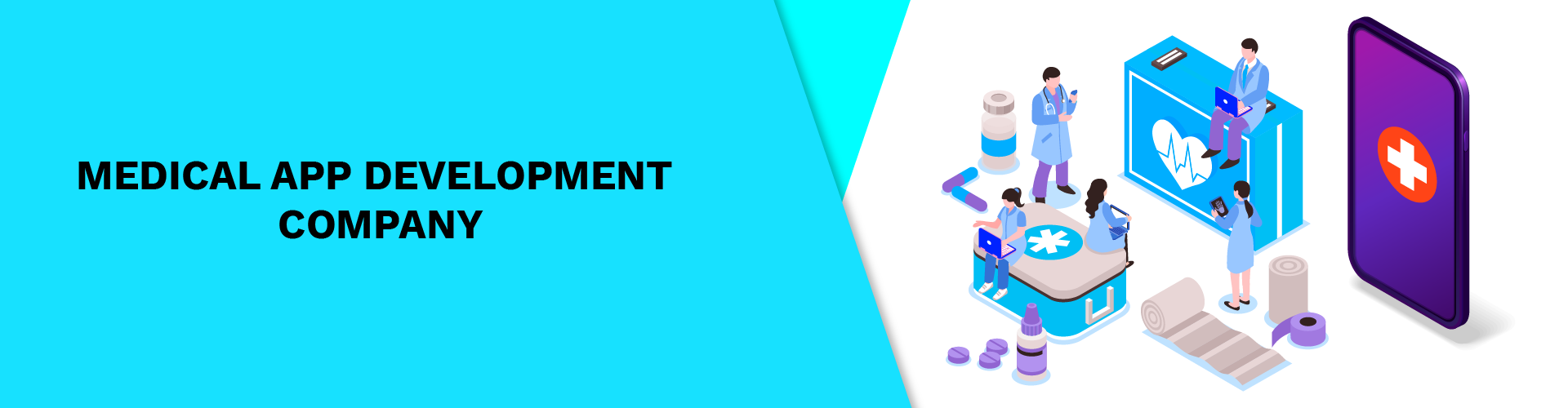
Healthcare has changed faster in the last five years than it did in the previous two decades. Patients now expect to book appointments, receive lab results, consult physicians, and manage prescriptions without visiting a physical location. Clinicians expect real-time access to patient histories, diagnostic tools, and communication channels that fit within clinical workflows rather than disrupting them.
Building mobile applications for this environment is genuinely different from building for other industries. The margin for error in healthcare software is smaller, the regulatory surface is broader, and the consequences of poor data handling extend beyond user frustration into patient safety and institutional liability. A medical app that crashes during a telehealth session, exposes protected health information through an insecure API, or delivers inaccurate medication reminders is not merely a bad product. It is a professional and legal risk for the organization that deployed it.
Most development teams understand this conceptually. Fewer have the direct experience necessary to navigate it practically across the architecture decisions, compliance requirements, clinical workflow design, and integration complexity that medical applications actually involve. The gap between understanding healthcare compliance in principle and building healthcare software that satisfies regulatory auditors, clinical directors, and patient privacy advocates simultaneously is where most generic development teams quietly run into trouble.
Hyperlink InfoSystem has built medical applications across patient engagement, clinical operations, remote monitoring, and health data management. The work requires genuine familiarity with how healthcare organizations operate, what compliance frameworks actually demand at the code level, and how clinical users interact with digital tools in environments where attention is divided and errors matter.
Medical App Development Services
Healthcare organizations require mobile technology that covers a wide operational surface. Patient-facing products, clinician tools, administrative platforms, and remote monitoring systems each carry distinct technical requirements and compliance considerations that demand specific engineering approaches.
Patient Engagement Applications
Mobile platforms that connect patients with their care teams outside clinical settings improve treatment adherence, reduce readmission rates, and extend the provider relationship into daily health management. Appointment scheduling, medication reminders, symptom tracking, care plan communication, and secure messaging between patients and providers each require careful design around both usability and HIPAA data handling requirements.
Patient-facing applications serve users who interact with healthcare technology under stress, with varying levels of digital literacy, and often on entry-level devices with inconsistent connectivity. Interface design that prioritizes clarity, minimal friction, and accessibility over visual sophistication produces better adoption outcomes in this context than design optimized for demonstration environments.
Telehealth and Virtual Care Platforms
Telehealth infrastructure requires low-latency video communication, secure session management, end-to-end encrypted data transmission, and integration with electronic health record systems that allow clinicians to access patient data during virtual consultations without leaving the platform. Applications that require clinicians to toggle between multiple systems during patient interactions create cognitive load that degrades care quality and adoption.
Platform reliability is non-negotiable in telehealth. A session drop during a mental health consultation or a medication review is not a minor inconvenience. It is a care disruption that affects clinical outcomes and patient trust. Backend infrastructure and mobile client architecture must be designed for this standard.
Clinical Workflow Applications
Hospital systems, specialty clinics, and ambulatory care organizations each operate clinical workflows that differ from one another and from the generic task management assumptions built into commercial software. Custom clinical tools built around the specific workflows of the deploying organization produce adoption rates and operational outcomes that off-the-shelf platforms customized after purchase cannot match.
Ward round support applications, clinical documentation tools, care coordination platforms, and interdisciplinary team communication systems each involve specific workflow logic that requires design engagement with the clinical users themselves rather than assumptions made by development teams without healthcare operational familiarity.
Remote Patient Monitoring
Wearable device integration, IoT health sensor connectivity, and continuous biometric data collection require backend architecture capable of ingesting high-frequency data streams while maintaining the data integrity and audit trail that clinical use of monitoring data requires. Alert logic that notifies care teams when patient readings cross clinical thresholds must be reliable enough to be trusted in actual clinical decision-making.
Health Data Management Platforms
Organizations managing population health data, research datasets, or multi-site patient records need platforms that enforce data governance policies, support role-based access controls across clinical and administrative user categories, and maintain audit logs that satisfy both internal compliance requirements and external regulatory review.
Ionic App Development
For healthcare organizations that need mobile applications accessible across iOS, Android, and web environments from a single development investment, Ionic framework development delivers consistent cross-platform performance. Ionic services are particularly suited to clinical administrative tools, patient portal extensions, and healthcare workforce applications where broad platform accessibility matters and where development efficiency allows organizations to deploy faster without sacrificing the compliance and security standards medical applications require.
Mobile Technology Solutions for Healthcare
The healthcare organizations that get the most from mobile technology investments are not necessarily those with the largest budgets. They are the ones that approach Mobile Technology Solutions with clarity about the specific operational problem being solved rather than building features because competitors have them or because a technology trend makes them seem relevant.
HIPAA Compliance Architecture
HIPAA compliance in mobile applications is not a checklist applied after development is complete. It shapes foundational decisions about data storage, transmission encryption, access control architecture, audit logging, session management, and third-party service selection throughout the entire build. Development teams that treat compliance as a final review rather than an architectural input consistently produce applications that require expensive remediation before they can be deployed in clinical environments.
Data at rest must be encrypted using standards that satisfy HIPAA Security Rule requirements. Data in transit must use transport layer security protocols that protect against interception. User authentication must enforce credential standards appropriate for clinical environments. Business associate agreements must be in place with every third-party service that handles protected health information. These are not optional enhancements. They are baseline requirements that shape every technical decision the development team makes.
EHR and Health System Integration
Medical applications that cannot exchange data with the electronic health record systems that clinical organizations depend on create information silos that ultimately defeat their own purpose. HL7 FHIR integration standards, direct EHR API connections, and health information exchange compatibility allow mobile applications to participate in clinical data flows rather than operating alongside them.
Integration complexity varies significantly across EHR vendors and system versions. Development teams without direct experience connecting to Epic, Cerner, Allscripts, or other major platforms underestimate this complexity in ways that extend timelines and budgets well past initial estimates.
Clinical User Experience Design
Clinicians interact with digital tools in environments where their primary attention is the patient in front of them. Applications that require multiple taps to complete documentation, obscure critical information under navigation layers, or force clinicians out of their established workflow patterns generate resistance that prevents adoption regardless of technical quality.
Designing for clinical users requires direct observation of how they currently work, what information they need at specific workflow moments, and what interaction patterns fit within the cognitive load of active patient care. Design built from that understanding produces tools clinicians actually use rather than tools they work around.
Why Healthcare Organizations Work With Hyperlink InfoSystem
Medical application development requires a partner that understands both the technical and operational dimensions of healthcare. Technical capability without healthcare familiarity produces compliant but clinically useless applications. Healthcare familiarity without technical depth produces well-intentioned products that fail under real system loads or security scrutiny.
App Developers for Hire With Healthcare Experience
Healthcare organizations that need to augment internal technical capacity or build dedicated engineering teams around specific medical software projects can App Developers for Hire through Hyperlink InfoSystem with direct experience in HIPAA-compliant architecture, clinical workflow design, and health system integration. Dedicated team engagement models give healthcare organizations consistent engineering resources whose accumulated knowledge of the organization's systems and compliance requirements improves decision quality across multi-phase development programs.
Regulatory Knowledge Applied at the Architecture Level
Compliance requirements that surface during a regulatory review after the application is built are expensive to correct and disruptive to deployment timelines. Hyperlink InfoSystem applies regulatory knowledge at the architecture level so that HIPAA requirements, state healthcare data laws, and clinical safety standards shape foundational technical decisions rather than being discovered as gaps during pre-launch compliance review.
Post-Launch Support Aligned With Healthcare Cycles
Healthcare applications require ongoing maintenance attention that reflects the regulatory and clinical environment they operate within. HIPAA guidance evolves. EHR platforms release updates that affect integration behavior. iOS and Android platform changes create compatibility requirements. Security vulnerabilities require rapid patching in environments where patient data is at risk. Post-launch support built into every engagement ensures these requirements are managed continuously rather than deferred until they create operational problems.
Our Medical App Development Process
Clinical Discovery and Requirements
Understanding the clinical workflows the application needs to support, the patient populations it will serve, the compliance obligations it must satisfy, and the health systems it must integrate with before any design or architecture decision is made.
Compliance and Security Architecture
Defining data handling policies, encryption standards, authentication requirements, audit logging architecture, and third-party service compliance obligations before development begins so that compliance is structural rather than retrofitted.
Clinical UX Design and Prototyping
Building and testing interface prototypes with actual clinical users before full development begins validates workflow logic and usability under real clinical conditions rather than controlled testing environments.
Development and Clinical Testing
Building in structured increments with functional testing, security assessment, EHR integration validation, and performance evaluation under realistic data volumes and usage patterns.
Deployment and Integration
Connecting finished applications to health system infrastructure with monitoring in place from the first day of clinical use, with rollback procedures planned before go-live.
Ongoing Compliance and Maintenance
Regular security audits, compliance monitoring, platform compatibility updates, and feature development aligned with evolving clinical requirements and regulatory guidance.
Frequently Asked Questions
1. What compliance standards do medical applications need to meet?
HIPAA governs protected health information handling in the US, covering data encryption, access controls, audit logging, and business associate agreements with third-party services touching patient data.
2. How long does medical app development typically take?
Focused patient engagement applications reach deployment in twelve to eighteen weeks. Telehealth platforms, EHR-integrated clinical tools, and remote monitoring systems with complex backend requirements take longer based on integration and compliance scope.
3. Can mobile medical applications integrate with existing EHR systems?
Yes, HL7 FHIR standards and direct EHR API connections allow mobile applications to exchange clinical data with major EHR platforms, though integration complexity varies significantly across vendors and system versions.
4. Is Ionic suitable for clinical healthcare applications?
Ionic is well-suited for clinical administrative tools, patient portal extensions, and workforce applications where cross-platform accessibility is a priority and where the compliance and security architecture is implemented correctly throughout the build.
5. What ongoing support does Hyperlink InfoSystem provide after a medical app launches?
Post-launch support covers security patch management, HIPAA compliance monitoring, EHR integration maintenance, platform compatibility updates, and feature development aligned with evolving clinical and regulatory requirements.
Amplifying Business Progress Through Smart Solutions
Obtain robust software solutions, modernize systems, and leverage futuristic technologies for growth opportunities with the capabilities of a leading development company.
 Explore Services


Mobile App Development
We specialize in augmenting the mobile experience for users of different niches, industries, products, and more that can help businesses enhance their value with futuristic mobile applications.
Web Development
Explore our web development expertise to maximize your web presence which can help you captivate the audience by delivering unparalleled web experience.
eCommerce Development
Delivering perfect and top-notch customer satisfaction through smoothly functioning, secure, and integrated e-commerce solutions that help businesses boost sales, expand user engagement, and enhance business ROI.
Blockchain Development
Get the decentralized blockchain solution that can bring innovation through cutting-edge technologies to power up, revolutionize, and transform the business and operations.
Game Development
Turn your simple game development requirements into amazing high-quality 2D & 3D interactive gaming solutions with stunning graphics, smooth gameplay, engaging storylines, and more!
Salesforce Solution
Unlock the full potential of the Salesforce development that enables the business to address all the business complications and streamline the business operations with intelligence.
AI & ML
Offering end-to-end Artificial Intelligence development services to create custom and domain-specific AI solutions tailored to your unique business requirements.
IoT & Embedded
Building smart gadgets to create reliable infrastructure to bring holistic business change and enhance business proficiency through our custom IoT solutions.
Offering Exclusive Edge Following Custom Software Development Lifecycle
Customizing and delivering cutting-edge solutions employing the custom software development lifecycle to help businesses meet their future demands


Latest Blogs
Browse through the technical knowledge about latest trends and technologies our experienced team would like to share with you
Get All Insights




Is BlockChain Technology Worth The H ...
Unfolds The Revolutionary & Versatility Of Blockchain Technology ...


IoT Technology - A Future In Making ...
Everything You Need To Know About IoT Technology ...
Feel Free to Contact Us!
We would be happy to hear from you, please fill in the form below or mail us your requirements on info@hyperlinkinfosystem.com
Hyperlink InfoSystem Bring Transformation For Global Businesses
Starting from listening to your business problems to delivering accurate solutions; we make sure to follow industry-specific standards and combine them with our technical knowledge, development expertise, and extensive research.

4500+
Apps Developed

1200+
Developers

2200+
Websites Designed

140+
Games Developed

120+
AI & IoT Solutions

2700+
Happy Clients

120+
Salesforce Solutions

40+
Data Science

