




How Much Does It Cost To Develop An App Like TaskRabbit?
Understanding the Cost, Features, Technology Stack, and Development Process Required to Build an App Like TaskRabbit.
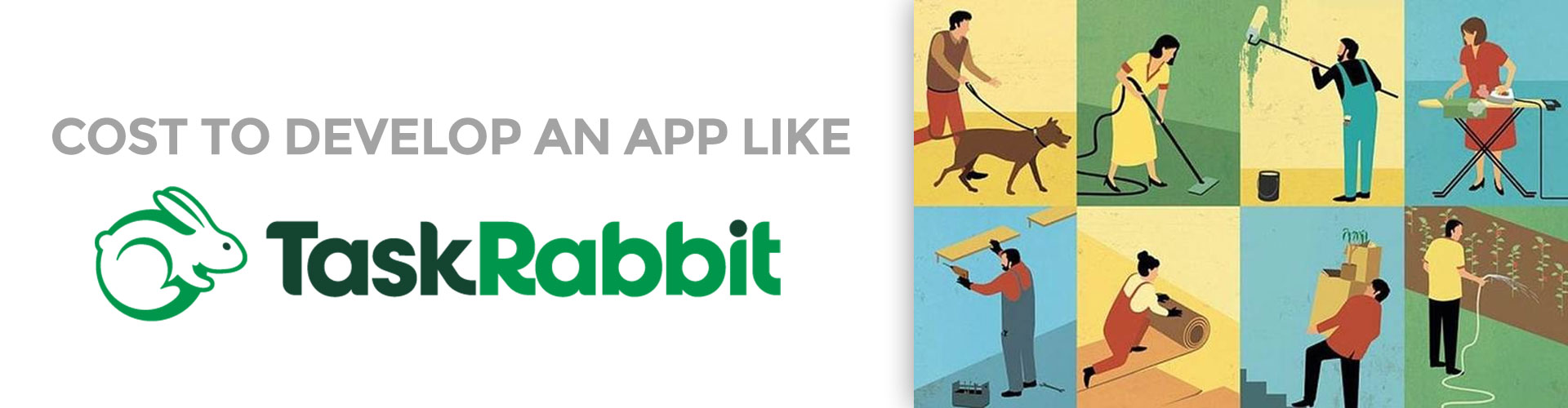
TaskRabbit solved something specific and solved it well. Before it existed, finding someone to assemble furniture, hang shelves, or move boxes across town meant either knowing the right people or spending an afternoon on Craigslist hoping whoever showed up matched their listing. TaskRabbit replaced that uncertainty with a structured marketplace - vetted taskers, transparent pricing, reviewed track records, and a booking experience that turned a frustrating process into something people actively preferred. The result is a platform processing millions of tasks annually that became the default answer to where you find reliable help with practical jobs.
Founders looking to build something similar for a specific geography or service vertical are looking at a product that appears deceptively simple from the outside. Browse taskers, pick one, book a time, pay after completion. Four steps. What those four steps conceal is a real-time availability system, two-sided matching architecture, payment processing with dispute resolution, a verification layer making users comfortable inviting strangers into their homes, and a notifications infrastructure keeping both sides of every transaction informed at the right moments.
Hyperlink InfoSystem has built enough marketplace platforms to understand where the complexity concentrates in a product like this - and where founders who haven't done it before consistently underestimate what they're getting into. We bring that experience starting with the scoping conversation that determines whether the project is set up for success before development begins.
Core Features That Determine the Cost of a TaskRabbit-Style Build
Dual-Side Application Architecture
A gig economy marketplace requires two separate application experiences - the client-facing product and the tasker-facing product - connected by a backend managing interactions in real time. These aren't the same interface with different login credentials. Client apps prioritise search, profile comparison, and booking clarity. Tasker apps prioritise job notifications, schedule management, and earnings visibility. Building both properly adds frontend surface area and significantly increases backend coordination complexity that neither application alone would require.
Real-Time Availability and Scheduling
Taskers manage their own calendars and update capacity as jobs get booked. Clients need to see accurate availability rather than data that was correct twelve minutes ago. The scheduling infrastructure - real-time calendar sync, conflict prevention, buffer time management, and rescheduling workflows handling downstream effects on other bookings - is consistently one of the more demanding components of this build. It's also where failures are most visible and most costly for both sides of the transaction.
Payment Processing and Earnings Management
TaskRabbit's model holds client funds until task completion and distributes tasker earnings on a defined schedule. Replicating this requires payment gateway integration with escrow capability, split payment mechanics, refund and dispute workflows, and payout infrastructure taskers depend on for reliable cash flow. KYC verification for professional payouts and financial compliance requirements for the target geography add further complexity. Payment architecture rushed to meet a launch deadline creates more post-launch problems than almost any other component.
Verification and Trust Infrastructure
What makes a client comfortable booking someone they've never met to come into their home is the trust infrastructure - the verification process vetting taskers, the review system surfacing track records, and design decisions presenting this information in ways that influence booking decisions. Building verification workflows that collect identity documents, integrate with background check providers, and track approval status requires both technical build and operational process thinking. The review system making trust visible - gaming-proof mechanics, dispute handling, algorithmic weighting in search - adds further complexity.
In-App Messaging and Notifications
Communication between clients and taskers needs to stay in-app rather than moving to external channels, because in-platform messaging maintains quality oversight and dispute resolution capability. The notifications infrastructure alongside this - real-time job alerts for taskers, booking confirmations for clients, payment notifications for both - requires careful design to be genuinely useful rather than creating notification fatigue that drives users to disable them entirely.
What Does Building an App Like TaskRabbit Actually Cost?
A focused MVP covering core booking functionality, basic tasker and client apps on a single platform, essential payment processing, and minimum viable trust infrastructure typically starts between $35,000 and $65,000. A full-featured product with dual-platform apps, advanced matching, comprehensive verification, robust payment architecture, in-app messaging, and admin tooling runs between $90,000 and $180,000 for complex builds.
The variables moving the number most are platform scope, backend complexity, matching logic sophistication, payment gateway choices, and compliance requirements. Our custom mobile app development solutions are scoped from actual project parameters established during discovery rather than industry average ranges. A proper scoping conversation produces the number you can actually build a business plan around.
Technology Decisions That Shape Cost and Scalability
Cross-platform frameworks - Flutter and React Native - are typically the most practical choice for client and tasker applications, delivering simultaneous Android and iOS coverage from a single codebase. For Android-specific performance considerations - background services for real-time notifications, location tracking optimisation, battery management for taskers running the app throughout a working day - our Android app development consulting brings platform-specific depth that matters when Android-specific behaviour creates the performance issues that user reviews notice and ratings reflect.
Backend architecture typically starts with a monolithic structure practical for the MVP stage, designed from the beginning to decompose into services as scale demands. The decisions mattering most at architecture stage are data model design, real-time infrastructure supporting availability and messaging, and payment system integration - these are harder to change post-launch than almost anything else in the system.
Where Founders Consistently Underestimate TaskRabbit-Style Builds
The components that surprise aren't the visible ones. Nobody underestimates the booking interface. What catches founders off guard is the operational backend - the admin tooling that allows the platform team to manage disputes, review verifications, handle payment issues, and monitor platform health at scale. Platforms launching without robust admin tooling find their teams spending hours on manual processes that should be automated. Platforms cutting corners on verification find their trust eroded by the first few bad experiences, which no marketing budget recovers.
Why Hyperlink InfoSystem for a TaskRabbit-Style Build
Two-sided gig economy marketplace builds are a specific engineering challenge that doesn't generalise well from other product types. The dual architecture, real-time coordination, payment complexity, and trust mechanics all require experience that comes from building this category of product specifically. We bring that experience alongside the discipline to scope honestly - because founders who understand the real cost and complexity before committing make significantly better decisions than those who discover it mid-build when the budget is already spent.
Frequently Asked Questions
1. What's the minimum viable version of a TaskRabbit-style platform?
An MVP that can demonstrate real value needs both sides of the marketplace working simultaneously - client and tasker applications, core booking flow, real payment processing with escrow, basic verification, and a review system. Cutting below this produces something that can't prove the model works because the trust and payment infrastructure making users willing to transact isn't present. Our custom mobile app development solutions are specifically structured for founders establishing this minimum threshold without overbuilding for scale they haven't yet achieved.
2. Android or iOS first - how do you decide?
Target market and user demographic determine this. Most gig economy markets outside the United States carry significantly higher Android penetration, making Android the natural first platform. Within the US, the split is closer. Cross-platform development - building both simultaneously from a shared codebase - is often the most practical path for founders who can't afford to leave half their potential market on an unlaunched platform. Our Android app development consulting helps founders in Android-heavy markets understand the specific technical considerations affecting performance rather than treating Android as simply the non-iOS option.
3. How do you handle tasker verification at scale?
Technically, we build document collection workflows, integrate with background check providers, track approval status, and create admin tools managing verification without manual bottlenecks. The calibration conversation - what verification is genuinely necessary for the trust level the specific market requires - is equally important. Over-verification creates supply-side friction reducing tasker availability. Under-verification creates client trust gaps reducing demand. Getting this right is a discovery conversation, not a post-build adjustment.
4. What ongoing costs should founders expect after launch?
Infrastructure scaling with usage, payment gateway transaction fees, background check costs per onboarded tasker, customer support tooling, platform maintenance, and ongoing feature development. The operational cost of running a live two-sided marketplace is consistently underestimated relative to build cost. Projecting these realistically before committing to the build produces significantly better financial planning than discovering them post-launch when they affect unit economics the business model was built around.
5. How do you approach the payment and escrow architecture?
When you hire dedicated Android developers and broader payment engineering specialists through our team, the payment system is scoped as a first-class component rather than an integration detail. Escrow mechanics, split payment logic, dispute handling, payout scheduling, and KYC verification for professional payouts are all scoped explicitly during discovery and built with the reliability that financial systems demand. Payment infrastructure treated as an afterthought is the most reliable source of post-launch operational problems we see in marketplace builds.
6. How long does a realistic build take?
A focused MVP typically runs eighteen to twenty-four weeks from completed discovery to a testable product. Full-featured builds with advanced matching, comprehensive verification, in-app messaging, admin tooling, and production-grade infrastructure take longer. Scope clarity at project start and payment compliance complexity in the target geography affect timelines more than development velocity. We build from actual scoping parameters and communicate changes immediately when project reality diverges from initial estimates.
7. Can the platform expand into multiple cities or countries after launch?
Yes - and the architecture decisions determining whether expansion is straightforward or painful are made in the first few weeks of the project. Multi-currency payment support, localisation infrastructure, configurable service category structures for different geographies, and data architecture keeping markets operationally separate while allowing platform-wide reporting are design decisions, not features added when expansion becomes relevant. Founders who plan for geographic expansion before launch build systems that accommodate growth rather than systems requiring significant rearchitecting at the moment growth arrives.
Amplifying Business Progress Through Smart Solutions
Obtain robust software solutions, modernize systems, and leverage futuristic technologies for growth opportunities with the capabilities of a leading development company.
 Explore Services


Mobile App Development
We specialize in augmenting the mobile experience for users of different niches, industries, products, and more that can help businesses enhance their value with futuristic mobile applications.
Web Development
Explore our web development expertise to maximize your web presence which can help you captivate the audience by delivering unparalleled web experience.
eCommerce Development
Delivering perfect and top-notch customer satisfaction through smoothly functioning, secure, and integrated e-commerce solutions that help businesses boost sales, expand user engagement, and enhance business ROI.
Blockchain Development
Get the decentralized blockchain solution that can bring innovation through cutting-edge technologies to power up, revolutionize, and transform the business and operations.
Game Development
Turn your simple game development requirements into amazing high-quality 2D & 3D interactive gaming solutions with stunning graphics, smooth gameplay, engaging storylines, and more!
Salesforce Solution
Unlock the full potential of the Salesforce development that enables the business to address all the business complications and streamline the business operations with intelligence.
AI & ML
Offering end-to-end Artificial Intelligence development services to create custom and domain-specific AI solutions tailored to your unique business requirements.
IoT & Embedded
Building smart gadgets to create reliable infrastructure to bring holistic business change and enhance business proficiency through our custom IoT solutions.
Offering Exclusive Edge Following Custom Software Development Lifecycle
Customizing and delivering cutting-edge solutions employing the custom software development lifecycle to help businesses meet their future demands


Latest Blogs
Browse through the technical knowledge about latest trends and technologies our experienced team would like to share with you
Get All Insights






Is BlockChain Technology Worth The H ...
Unfolds The Revolutionary & Versatility Of Blockchain Technology ...


IoT Technology - A Future In Making ...
Everything You Need To Know About IoT Technology ...
Feel Free to Contact Us!
We would be happy to hear from you, please fill in the form below or mail us your requirements on info@hyperlinkinfosystem.com
Hyperlink InfoSystem Bring Transformation For Global Businesses
Starting from listening to your business problems to delivering accurate solutions; we make sure to follow industry-specific standards and combine them with our technical knowledge, development expertise, and extensive research.

4500+
Apps Developed

1200+
Developers

2200+
Websites Designed

140+
Games Developed

120+
AI & IoT Solutions

2700+
Happy Clients

120+
Salesforce Solutions

40+
Data Science

